
The Centralized Compute Revolution: How Drako DriveOS is Reinventing Automotive Architecture for Enhanced Performance and Affordability
In the rapidly evolving landscape of automotive engineering, a seismic shift is underway. The traditional approach to vehicle electronics, characterized by a dizzying array of specialized Electronic Control Units (ECUs) and intricate wiring harnesses, is proving increasingly unsustainable. We’re witnessing an era where sophisticated software commands an ever-larger portion of a vehicle’s total cost, and the complexity inherent in current architectures presents a significant hurdle to both innovation and consumer affordability. However, a visionary company, Drako Motors, is poised to fundamentally alter this paradigm with their groundbreaking Drako DriveOS. This advanced operating system promises to democratize high-performance automotive features, making them accessible even in mass-market vehicles, and ushering in an era of unparalleled efficiency, cybersecurity, and driving exhilaration.
For over a decade, the automotive industry has grappled with the escalating cost and complexity of its electronic systems. Software, once a mere fraction of a vehicle’s price tag, now accounts for a substantial percentage, a trend projected to continue its upward trajectory, especially with the proliferation of advanced driver-assistance systems (ADAS) and autonomous driving capabilities. This escalating software expenditure, coupled with the physical limitations of distributed ECU architectures, has created a bottleneck for progress. The necessity for hundreds of individual microcontrollers, each running its own proprietary real-time operating system, has resulted in a tangled web of wiring that not only adds weight and cost but also creates an expansive digital attack surface for malicious actors.
Enter Drako Motors, co-founded by Dean Drako and Shiv Sikand, veterans of the semiconductor industry who leveraged their expertise in design-data management to fuel their passion for automotive innovation. Their journey began with a bold vision: to create a unified, intelligent computing platform that could directly interface with vehicle sensors and actuators. This radical departure from the status quo promised to slash latency, enhance performance, bolster safety, and fortify cybersecurity. Their ambition found its ultimate proving ground in the development of the Drako GTE, a hypercar designed not merely as a showcase of extreme performance, but as a tangible demonstration of the power and potential of their novel operating system, Drako DriveOS.
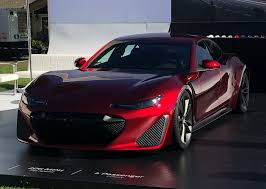
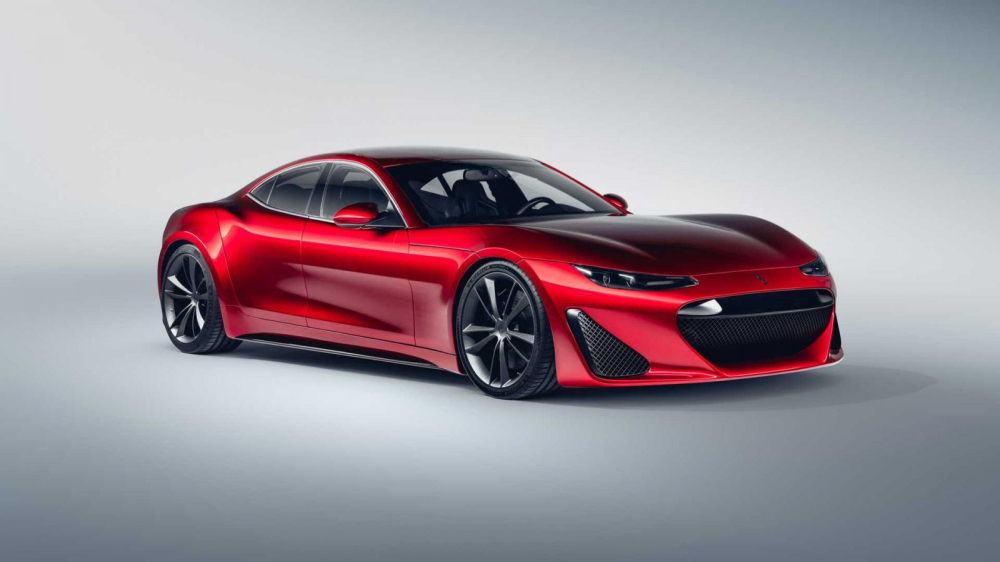
The Drako GTE itself is a testament to their commitment. Based on the Fisker Karma but extensively re-engineered and electrified, it boasts a formidable 1,200 horsepower output from its quad-motor setup. This formidable machine, with a price tag of $1.25 million and planned for a limited production run of 25 units, served as the ultimate testbed for Drako DriveOS. Beyond its breathtaking performance, the GTE integrates all critical functions – from powertrain management and torque vectoring to infotainment and driver assistance systems – under the purview of a single, centralized brain. The company’s subsequent unveiling of the Drako Dragon, a five-seat SUV with an astonishing 2,000 horsepower and a more accessible $300,000 price point, further underscores their commitment to bringing this advanced technology to a wider audience.
Deconstructing the Traditional Automotive Electronic Architecture: A Legacy of Complexity
To truly appreciate the revolutionary nature of Drako DriveOS, it’s essential to understand the deeply entrenched traditional automotive electronic architecture. For decades, vehicle manufacturers have relied on a decentralized approach, delegating specific functions to dedicated ECUs. This model, while functional, has become increasingly unwieldy. Consider a modern luxury vehicle; it might contain upwards of 100 distinct ECUs, each responsible for tasks ranging from engine management and anti-lock braking systems to power windows, seat heating, and even fragrance dispensers.
The primary driver for this distributed design was the perceived limitations of general-purpose operating systems in handling the stringent real-time processing demands critical for automotive safety. Suppliers, often developing proprietary solutions for specific functions, argued that general-purpose operating systems like Windows or Linux lacked the deterministic nature required to guarantee immediate responses to safety-critical events. This led to a fragmented ecosystem where each ECU operated with its own miniature, often closed-source, real-time operating system.
The consequence of this fragmentation is a sprawling network of hundreds of interconnected ECUs, communicating via a labyrinthine array of wires and data buses – often referred to as “spaghetti wiring.” This intricate network not only adds significant weight and cost to vehicle assembly but also presents a substantial cybersecurity vulnerability. Each individual ECU, and the communication pathways between them, represents a potential “attack surface” through which hackers can infiltrate the vehicle’s systems. We’ve seen alarming instances where vulnerabilities in seemingly innocuous systems, like infotainment units or even lighting modules, have been exploited to gain access to critical vehicle controls.
Furthermore, the need for specialized hardware and software for each function means that manufacturers often miss out on the cost efficiencies and rapid development cycles afforded by commodity computing hardware. The automotive industry has, in essence, remained a notable holdout in adopting the more streamlined, centralized computing paradigms that have revolutionized other sectors like consumer electronics and enterprise computing.
Drako DriveOS: A Paradigm Shift Towards Centralized Intelligence
Drako DriveOS offers a compelling alternative, fundamentally reshaping how vehicles process information and interact with their environment. At its core, the system leverages the ubiquitous and powerful Linux operating system as its foundation. While standard Linux, in its vanilla form, is not inherently deterministic for safety-critical applications, Drako has ingeniously overcome this hurdle through a proprietary development known as Quest V, in collaboration with Dr. Richard West of Boston University.
Quest V introduces novel kernel structures and data pipe mechanisms that effectively create isolated, real-time processing environments within the Linux framework. Kernels, the fundamental core of an operating system, act as the crucial intermediary between hardware and software. Drako’s innovation lies in its ability to create specialized kernels that behave like hypervisors, guaranteeing that safety-critical tasks are executed with absolute priority and without interruption.
The key to this is the novel “data pipe.” This mechanism creates a secure and direct conduit between the safety-critical processor and the hardware responsible for receiving safety-critical data from sensors. This effectively partitions and isolates these vital functions, preventing less critical processes, such as those handling tire pressure monitoring or ambient temperature, from interfering with immediate responses required for braking or obstacle avoidance. This allows Drako DriveOS to harness the power and flexibility of Linux for its non-critical functions while ensuring an unwavering level of real-time determinism for safety-critical operations. This fusion of a powerful, open-source backbone with specialized, real-time kernels represents a significant leap forward in automotive software design.
Beyond Performance: Unlocking Savings and Enhancing Connectivity
The benefits of Drako DriveOS extend far beyond its impact on performance and safety. The system also promises substantial cost savings and simplified integration for vehicle manufacturers. Traditional automotive networks often rely on protocols like CAN, Flexray, and LIN. While these have served the industry well, they present limitations in terms of data transmission speed and often require complex translation layers between the main processor and the individual sensors or actuators. This translation process introduces latency and necessitates additional custom silicon, adding to the overall cost.
Drako DriveOS, however, capitalizes on the inherent capabilities of modern Intel processors, which are equipped with the universal USB communication and control protocol. This allows the central processor to communicate directly with sensors and actuators via USB, eliminating the need for complex translation. At the sensor and actuator level, only simple, cost-effective pin connectors are required to direct these USB signals. Shiv Sikand estimates this can translate into savings of $4 to $10 per connection compared to the custom silicon often required for other network protocols.
The implications of this are profound. As vehicle systems become more complex, the cost savings associated with this simplified integration and the use of commodity hardware can be substantial. This directly contributes to the goal of making advanced automotive features more affordable for a broader consumer base. Furthermore, the sheer bandwidth capabilities of modern USB standards, particularly with upcoming iterations like USB 5 capable of 80 gigabits per second, far outstrip traditional automotive buses. This is not just an advantage for current systems but a critical enabler for the future of autonomous driving, which will necessitate the processing of immense volumes of data from high-resolution cameras and lidar sensors. Commodity cameras, for instance, often natively communicate over USB, further streamlining integration.
The implications for the automotive aftermarket and repair industry are also significant. A more standardized and simplified wiring and computing architecture translates to easier diagnostics and potentially lower repair costs, a welcome prospect for vehicle owners grappling with increasingly complex modern vehicles. The availability of diagnostic tools and repair knowledge will also likely improve with a more unified system.
Fortifying the Digital Fortress: Enhanced Cybersecurity
In an era where vehicle connectivity is paramount, cybersecurity has transitioned from a niche concern to a critical imperative. The fragmented ECU architecture of traditional vehicles, with its multitude of interconnected systems, creates an extensive digital attack surface. This has led to a growing number of reported cyber incidents, ranging from data breaches to more alarming instances of vehicle control being compromised.
Drako DriveOS presents a fundamentally more secure architecture. By consolidating control functions into a single, centralized compute platform running on a PC core, the system significantly reduces the number of potential entry points for attackers. Instead of navigating a complex web of individual ECUs, cybercriminals would need to breach the core operating system and its highly secure hardware.
Moreover, the use of USB as a primary communication protocol offers additional security advantages. Unlike standard communication protocols like CAN or Ethernet, which are widely understood and have established attack vectors, USB is an infrastructure designed for device control. The Drako DriveOS software can establish its own proprietary communication protocols over USB, making it exponentially more difficult for unauthorized access. This layered approach to security, combining a consolidated architecture with a robust and less universally understood communication protocol, provides a significantly higher level of protection against cyber threats. This enhanced cybersecurity is not just a feature; it’s an essential foundation for building trust in the increasingly connected and automated vehicles of tomorrow. The development of secure automotive software is a paramount concern for every manufacturer, and Drako DriveOS offers a compelling solution to this pressing challenge.
The Road Ahead: Democratizing Innovation
The vision articulated by Shiv Sikand – to “put another one [PC] in their car” – encapsulates the transformative potential of Drako DriveOS. The ambition is not to hoard this revolutionary technology but to disseminate it widely, enabling a new generation of vehicles that are both more capable and more accessible. Drako Motors is positioning itself as a licensor of this performance-boosting, cost-saving software solution. Their economic model suggests that a modest licensing fee per vehicle, spread across a global automotive market numbering in the tens of millions, would represent a substantial return on their considerable investment, while simultaneously making advanced automotive engineering more attainable for everyday drivers.
The impact on the automotive industry could be profound. By reducing the reliance on expensive, bespoke hardware and complex integration processes, Drako DriveOS could accelerate the adoption of advanced features across a wider spectrum of vehicles. Imagine the sophisticated torque-vectoring capabilities previously reserved for hypercars becoming standard in mass-produced sedans and SUVs, or the seamless integration of advanced infotainment and driver-assistance systems without the prohibitive cost and complexity. This democratization of technology has the potential to redefine consumer expectations and push the boundaries of what’s possible in automotive design.
Having personally experienced the tangible benefits of reduced latency in enhanced cornering, acceleration, and braking through systems like the BMW iX3’s integrated approach, and having witnessed the dedication and discerning automotive taste of individuals like Dean Drako and Shiv Sikand, it’s clear that their instincts for leveraging silicon to elevate vehicle performance are exceptionally sound. Their commitment to simplifying complexity and enhancing the driving experience through intelligent software represents a pivotal moment for the automotive industry.
For automotive manufacturers seeking to navigate the complexities of modern vehicle development, enhance their product offerings, and improve their bottom line, understanding and exploring solutions like Drako DriveOS is no longer optional – it’s essential. The future of automotive engineering is undeniably software-defined, and Drako DriveOS offers a clear, powerful, and financially advantageous path forward.
Are you ready to explore how a centralized compute architecture can redefine your next vehicle project? Contact Drako Motors today to learn more about integrating Drako DriveOS and unlocking the future of automotive performance and affordability.