
Automotive Industry’s Pivot: Why Gas Engines Still Matter in 2026 and Beyond
BY [EXPERT NAME], INDUSTRY INSIGHTS ANALYST • MARCH 2, 2026
The electric vehicle revolution, once heralded as an unstoppable force, has encountered unexpected turbulence. As automakers navigate a volatile market landscape, the resilience of the internal combustion engine (ICE) has become a defining narrative of 2026. This pivot toward powertrain flexibility is reshaping product strategies and challenging long-held assumptions about the future of mobility.
In an exclusive interview, Gernot Döllner, CEO of Audi, articulated a clear vision: the U.S. market, in particular, is experiencing a significant swing back toward gasoline-powered vehicles. This shift is compelling manufacturers to re-evaluate their timelines and investments, fostering an era of unprecedented adaptability in automotive engineering.
The Economic and Regulatory Crosscurrents
The catalyst for this shift is multifaceted, with economic realities and regulatory changes playing pivotal roles. The elimination of the federal EV tax credit by the Trump administration in late 2025 delivered a sharp shock to the market, resulting in a dramatic contraction of EV sales toward the close of the year. This abrupt policy reversal exposed the fragility of demand when subsidies are withdrawn, forcing several automakers to pause or outright cancel planned U.S.-bound electric models.
However, the narrative extends beyond U.S. policy. In China and Europe, EV adoption continues to surge, albeit with its own set of challenges. Europe, grappling with grid stability and high electricity costs, is experiencing a resurgence in plug-in hybrid (PHEV) and extended-range electric vehicle (EREV) demand. China, the world’s largest EV market, is witnessing a similar trend, with consumers gravitating toward PHEVs that offer greater flexibility for longer journeys.

This divergence creates a complex global tapestry. While Europe and China push forward with electrification, the U.S. finds itself in a unique position. “The drivetrain concepts will definitely swing back to [internal combustion],” Döllner observed. “That’s what we see right now, and I don’t know if battery-electric will come back that fast.”
The American Market’s Enduring Love Affair with ICE
The U.S. automotive landscape has always been characterized by distinct preferences, and 2026 underscores these enduring traits. The American consumer’s affinity for large, powerful vehicles—particularly SUVs and pickup trucks—remains unshaken. These segments, which form the bedrock of U.S. sales volumes, are inherently ICE-centric, relying on the torque and range that gasoline engines provide.
Furthermore, the infrastructure required to support a mass-market EV transition remains underdeveloped in many parts of the country. Charging infrastructure is inconsistent, grid capacity is a concern in numerous regions, and the upfront cost of EVs, even with incentives, remains a barrier for a significant portion of the population.
“Markets are so dynamic, and every market has its specialty,” Döllner noted. “So the U.S. has these rugged SUV and pickup segments, quite ICE-heavy consumer landscape. China is ahead on battery electric, but has a backswing to extended-range (EREV) and even plug-in hybrid. There are a lot of dynamics, so it isn’t too easy to tell where the road is heading.”
The Audi Strategy: A Dual-Powertrain Approach
In response to this evolving reality, Audi has recalibrated its global strategy. The ambitious 2033 all-electric target, while still a long-term objective, has been adjusted to accommodate the current market dynamics. This recalibration is not a retreat but a strategic pivot toward flexibility.
“I don’t see an island, I just see that we need the flexibility anyhow,” Döllner explained. This perspective underscores a critical insight: the future of automotive mobility will not be defined by a single powertrain but by a portfolio of technologies capable of meeting diverse regional demands.
For Audi, this translates into a dual-track development approach. The company will continue to refine its existing internal combustion and hybrid platforms, investing in incremental improvements that enhance efficiency and performance. “I don’t see necessarily new platforms,” Döllner stated. “But I see further development of platforms to bring the next level of electronics and bring some degree of more hybridization.”
This strategy acknowledges that the lifespan of ICE technology is far from over. In the U.S. market, gasoline engines will likely remain a dominant force well into the 2030s, coexisting with an expanding range of electrified options.
The Compact Car Exception
There is one segment where electrification is proceeding apace: compact vehicles. Smaller cars, such as the Audi A3, are poised to transition to all-electric platforms earlier than their larger counterparts. This trend is being driven primarily by regulatory pressures in China and Europe, where stringent emissions standards are compelling manufacturers to electrify even the most affordable segments.
“The one exception is compact cars such as the A3 and anything smaller, which, ‘driven by China and European legislation, will be all-electric sometime in the early 2030s,'” Döllner confirmed. This exception highlights the fragmented nature of global regulations and the need for automakers to tailor their product portfolios to specific regional requirements.
The Critical Decision Point: 2030s Outlook
While Audi is committed to internal combustion for the foreseeable future, the company is not closing the door on future innovation. A critical decision point lies ahead, likely in the early 2030s, regarding the development of next-generation ICE platforms.
“Maybe that decision would have to be taken at the beginning of the ’30s if we see that there is still that demand, especially in the U.S., regarding combustion engines, then we will have to think about a next-generation platform for combustion engine cars,” Döllner elaborated.
This foresight demonstrates a pragmatic approach to long-term planning. By keeping the possibility of new ICE platforms alive, Audi ensures that it can respond effectively to market demands should the current trend toward electrification falter or plateau.
The Rationale for Dedicated Platforms
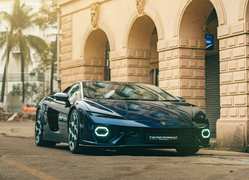
Döllner’s confidence in Audi’s current strategy stems from the decision to develop dedicated platforms for battery-electric and internal combustion vehicles. This approach, while resource-intensive, allows each powertrain to be optimized for its specific requirements, avoiding the compromises that often plague multi-purpose architectures.
“We decided to have specific platforms for battery-electric and combustion engines, and I still believe that’s the right way to move. Too many compromises otherwise,” he asserted. This commitment to engineering excellence ensures that Audi vehicles, whether powered by gasoline or electricity, deliver the performance and refinement expected of the brand.
The Future of Audi’s Product Portfolio
The recalibration of Audi’s strategy opens exciting possibilities for future vehicle development. The company is not merely maintaining its current lineup but is exploring new segments that align with evolving consumer preferences.
The long-awaited successor to the R8 supercar, a topic of considerable speculation, remains a distinct possibility. While Döllner did not confirm specific details, he acknowledged the potential for such a vehicle. “That’s someday thinkable,” he mused, before offering a broader vision for Audi’s future portfolio.
“The perfect thing is that I can imagine an Audi from the A2, very efficient city car, to a super sports car, from a small SUV to a rugged SUV in the U.S., that would also fit the Audi brand.” This vision encompasses a comprehensive range of vehicles designed to meet the diverse needs of global consumers.
The Rugged SUV Segment: A Strategic Growth Area
The mention of a “rugged SUV in the U.S.” aligns with growing industry trends. As consumers seek vehicles that combine capability with everyday usability, the demand for off-road-capable SUVs is surging. This segment, long dominated by traditional truck-based platforms, is now seeing the emergence of more sophisticated, car-like offerings that deliver superior ride quality and interior refinement.
Industry reports suggest that Audi is actively exploring this space, with potential models leveraging the company’s expertise in quattro all-wheel-drive technology and advanced suspension systems. Such a vehicle would directly address the U.S. market’s preference for rugged styling and off-road capability while maintaining Audi’s signature luxury and technology.
Strategic Investments in 2026
The current automotive landscape demands strategic agility, and Audi is making calculated investments to ensure its long-term success. While the exact allocation of resources remains proprietary, industry analysis indicates a focus on several key areas:
Powertrain Optimization: Continued investment in internal combustion engine technology, particularly in hybridization and efficiency improvements, is a priority. This includes the development of advanced thermal management systems and lightweight materials to maximize performance while minimizing emissions.
EV Platform Refinement: For battery-electric vehicles, the focus is on enhancing charging infrastructure integration and improving battery technology. This ensures that Audi’s EV offerings remain competitive in terms of range, charging speed, and overall user experience.
Software and Connectivity: The shift toward software-defined vehicles is accelerating. Audi is investing heavily in its digital ecosystem, including infotainment systems, driver-assistance technologies, and over-the-air update capabilities. This ensures that Audi vehicles remain at the forefront of in-car technology.
Regional Customization: Recognizing the diverse needs of global markets, Audi is tailoring its product development to specific regional requirements. This includes developing models that are optimized for U.S. tastes, European regulations, and Chinese market preferences.
The Competitive Landscape in 2026
The automotive industry in 2026 is characterized by intense competition. Legacy automakers are vying with EV startups and technology companies for market share. In this environment, differentiation is key.

Audi’s dual-pow