
Subaru WRX: A Look at the Future After Rumors of a Japanese Market Shutdown
The automotive landscape is constantly evolving, driven by shifting consumer preferences, tightening regulatory frameworks, and technological advancements. In this dynamic environment, manufacturers must make strategic decisions to ensure the long-term viability of their product lineups. One recent development that has sparked considerable discussion among enthusiasts and industry observers alike is the reported halt in production of certain Subaru WRX models in the Japanese market. This news, while specific to Japan for now, raises broader questions about the future of this iconic performance sedan and its availability in key markets, including the United States.
The Japanese Market Shutdown: A Deep Dive
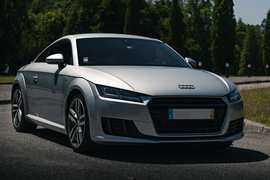
The Subaru WRX, a name synonymous with rally heritage and accessible performance, has long been a staple in the Japanese domestic market (JDM). However, recent announcements from Subaru have indicated a significant shift in strategy for this region. Reports from Japanese automotive news outlets suggest that production of the mainstream WRX S4 and its sportier variant, the WRX S4 STI Sport, is drawing to a close. The primary catalysts for this decision appear to be increasingly stringent noise and emissions regulations that are becoming increasingly difficult to meet for internal combustion engine (ICE) vehicles, particularly those with performance-oriented turbocharged engines.
The specific details emerging from Japan paint a clear picture. Subaru’s official consumer website in Japan now indicates that orders for the WRX S4 will cease in May 2026. Furthermore, the S4 STI Sport variant is slated for discontinuation with the current model generation. This move effectively signals a pause, if not an outright end, to the traditional, gasoline-powered WRX offerings in Subaru’s home market. While the company has teased a new, limited-edition WRX STI S# model, which was first unveiled at the Tokyo Auto Salon, its availability is expected to be extremely limited, with only 600 units planned for production. This suggests that even the STI variant may be a farewell gesture to the ICE-powered WRX in Japan before a potential shift towards electrification.
The implications of this Japanese market shutdown extend beyond its domestic borders. For enthusiasts and potential buyers in the United States, the news raises immediate concerns about the long-term availability and future of the WRX in the American market. Subaru of America has remained tight-lipped on the matter, offering no official statement regarding the impact of the Japanese production changes on the U.S. lineup. This silence, while understandable from a strategic marketing perspective, only fuels speculation and uncertainty among the passionate WRX fanbase.
Analyzing the Regulatory Landscape
The driving force behind Subaru’s decision in Japan appears to be a combination of escalating noise and emissions regulations. Japan has been progressively tightening its automotive standards to align with global environmental goals. While these regulations are crucial for reducing air pollution and mitigating climate change, they present significant challenges for manufacturers of performance vehicles.
The WRX’s signature turbocharged 2.4-liter flat-four engine, while a marvel of engineering that delivers exhilarating performance, is inherently more difficult to reconcile with these stricter standards than a standard passenger car engine. Turbocharged engines often generate higher levels of particulate matter and nitrogen oxides (NOx), and their performance characteristics can lead to higher noise levels, especially under hard acceleration—a characteristic that is central to the WRX’s appeal.
Meeting these regulations would likely require substantial engineering investment in areas such as exhaust after-treatment systems, engine management software recalibration, and noise insulation. While Subaru has a strong track record of innovation, the cost-benefit analysis for maintaining a niche performance model in a shrinking market segment may no longer be favorable. The trend across the automotive industry, particularly in markets with stringent regulations, is a clear pivot towards electrification. This transition allows manufacturers to meet environmental targets while potentially offering new performance characteristics that can appeal to modern consumers.
The U.S. market, while currently operating under different regulatory frameworks, is not immune to these global pressures. The Biden-Harris administration has set ambitious targets for electric vehicle adoption, and while the timeline and specific mandates may differ from those in Japan and Europe, the trajectory is undeniable. Manufacturers are increasingly viewing their product portfolios through the lens of electrification, seeking to future-proof their lineups against an inevitable shift away from purely internal combustion engines.
What This Means for the U.S. Market: Exploring the Possibilities
The lack of an official statement from Subaru of America regarding the Japanese market changes leaves the future of the U.S. WRX shrouded in uncertainty. However, by analyzing industry trends, Subaru’s broader strategies, and the specific characteristics of the WRX, we can explore several plausible scenarios.
One immediate possibility is that the U.S. market will continue to receive the current generation WRX for the foreseeable future, insulated from the Japanese production changes. The U.S. has always been a critical market for Subaru, and the WRX has a dedicated following here that values its rally heritage and all-wheel-drive performance. It is possible that Subaru will continue to produce and sell the current WRX in the U.S., even if it is phased out in Japan. This would allow Subaru to capitalize on the existing investment in the current platform while it explores and develops future alternatives.
However, this scenario may only be a temporary solution. Given the global nature of automotive development and the increasing cost of maintaining multiple production streams for the same model, it is more likely that the current WRX generation will eventually be discontinued in the U.S. as well. The question then becomes: what will replace it?
The most logical successor, following the industry-wide trend, would be an electrified WRX. This could take the form of a hybrid powertrain, offering a balance between traditional performance and improved efficiency, or a fully electric performance sedan. Subaru has already demonstrated its commitment to electrification with the introduction of the Solterra, its first all-electric vehicle. While the Solterra represents a shift towards SUVs and away from traditional sedan segments, it establishes a foundation for Subaru’s electric vehicle technology and manufacturing capabilities. A WRX-specific EV would need to retain the brand’s signature all-wheel-drive system, a capability that Subaru has mastered over decades. A dual-motor setup, one for the front axle and one for the rear, could provide the torque vectoring and performance characteristics that enthusiasts expect from a WRX.
Another possibility, though perhaps less likely given the regulatory pressures, is a significant redesign of the WRX to meet future standards. This could involve a smaller, more efficient turbocharged engine, potentially downsized from the current 2.4-liter to a 2.0-liter or even a 1.6-liter unit, combined with advanced emissions control technologies. This approach would allow Subaru to maintain the core identity of the WRX while addressing the regulatory challenges. However, such a redesign would require substantial investment and may not fully satisfy enthusiasts who value the WRX’s current level of performance.
The limited-edition WRX STI S# in Japan offers a glimpse into a potential future strategy: a focus on high-performance, limited-run models that serve as halo cars for the brand, while mainstream production shifts towards more environmentally friendly alternatives. It is conceivable that the U.S. market could see a similar approach, with a limited number of high-performance, gasoline-powered WRX models sold alongside a more mainstream, potentially electrified, successor.
The Role of Performance Sedan Enthusiasts
The potential discontinuation of the traditional gasoline-powered WRX raises important questions about the future of the performance sedan segment. For years, the WRX, along with vehicles like the Honda Civic Si and the Volkswagen Jetta GLI, has offered accessible, engaging performance to a broad range of buyers. These vehicles have served as gateways to the world of performance driving, providing a blend of practicality and excitement that is difficult to find in other segments.
As manufacturers increasingly pivot towards SUVs and crossovers, the performance sedan segment is shrinking. This trend is driven by a combination of consumer preference, which has largely shifted towards higher-riding utility vehicles, and regulatory pressures that favor the development of more fuel-efficient and emissions-compliant platforms. For enthusiasts who value the driving dynamics and traditional sedan form factor, this shift represents a significant loss.
However, the demand for performance-oriented vehicles remains strong. The success of enthusiast-focused models like the Toyota GR Corolla and the Hyundai Elantra N demonstrates that there is a dedicated market for engaging, driver-focused cars. This suggests that even if the traditional WRX is phased out, the demand for a performance sedan with Subaru’s engineering expertise and all-wheel-drive capabilities will likely persist. The challenge for Subaru will be to develop a successor that can meet the evolving expectations of these enthusiasts while navigating the constraints of modern regulations.
Subaru’s Broader Strategy: Electrification and Portfolio Optimization
The decision regarding the WRX in Japan must be viewed within the context of Subaru’s broader corporate strategy. Like many automakers, Subaru is navigating a complex transition period as it seeks to balance its legacy of producing reliable, all-wheel-drive vehicles with the imperative to embrace electrification.
Subaru’s partnership with Toyota on the development of the Solterra demonstrates its commitment to EV technology. This collaboration allows Subaru to leverage Toyota’s extensive experience in hybrid and electric vehicle development while maintaining its own brand identity and engineering expertise. The Solterra, while perhaps not the ideal form factor for WRX enthusiasts, represents a critical step in Subaru’s electrification journey. It establishes the foundational technology and manufacturing processes that will be essential for future electric models, including a potential WRX successor.
Furthermore, Subaru is likely engaged in a process of portfolio optimization. As regulatory pressures mount and market preferences shift, manufacturers must make difficult decisions about which models to prioritize. This may involve focusing resources on high-volume segments like SUVs and crossovers while scaling back on niche models, even those with iconic status. The WRX, with its relatively low