
Title: The Future of the Subaru WRX: What Japan’s Production Halt Means for US Enthusiasts
The automotive landscape is perpetually shifting, driven by evolving consumer demands, technological advancements, and increasingly stringent regulatory frameworks. In this dynamic environment, even iconic nameplates like the Subaru WRX are not immune to change. Recently, news emerged that Subaru will discontinue the production of mainstream WRX models in its home market of Japan. This development has naturally sparked considerable discussion among enthusiasts and industry observers, particularly regarding its potential implications for the WRX lineup in the United States. While Subaru of America has remained tight-lipped, a deeper analysis of the situation, informed by industry trends and regulatory pressures, suggests a nuanced outlook for the legendary rally-bred sedan.
The core of this development stems from Japan’s evolving regulatory environment. Reports indicate that tightening noise and emissions standards are posing significant challenges for the current generation of the WRX, specifically models equipped with the 2.4-liter turbocharged boxer engine. This engine, a hallmark of the WRX’s performance pedigree, is reportedly nearing the end of its homologation life in Japan due to these new restrictions. Consequently, Subaru has announced that orders for the WRX S4, the sole WRX variant currently offered in Japan, will cease in May 2026. Furthermore, the WRX S4 STI Sport variant is also slated for discontinuation with the current model generation.
This news naturally raises questions about the fate of the WRX in the United States. For American enthusiasts, the WRX represents a unique proposition in the market—a blend of everyday usability, all-wheel-drive capability, and exhilarating performance that few other vehicles can match. The thought of this icon disappearing from showrooms is understandably concerning. However, a closer examination of the market dynamics and regulatory differences between Japan and the U.S. suggests that the situation may not be as dire as it first appears.
One of the key distinctions lies in the regulatory frameworks of the two markets. As previously mentioned, Japan’s regulations are reportedly becoming more stringent, pushing manufacturers to adapt or phase out certain models. The United States, while also committed to reducing emissions and improving fuel efficiency, operates under a different set of standards. While the Environmental Protection Agency (EPA) continually updates its regulations, the timeline and specific requirements may differ from those in Japan. This regulatory divergence is a critical factor, as it allows Subaru to continue offering the current WRX in the U.S. market even if it must be retired in Japan. The EPA’s Corporate Average Fuel Economy (CAFE) standards, for instance, are a primary driver of automotive development in the U.S., but they do not necessarily dictate the same production timelines as Japan’s Kei car regulations or other domestic standards.
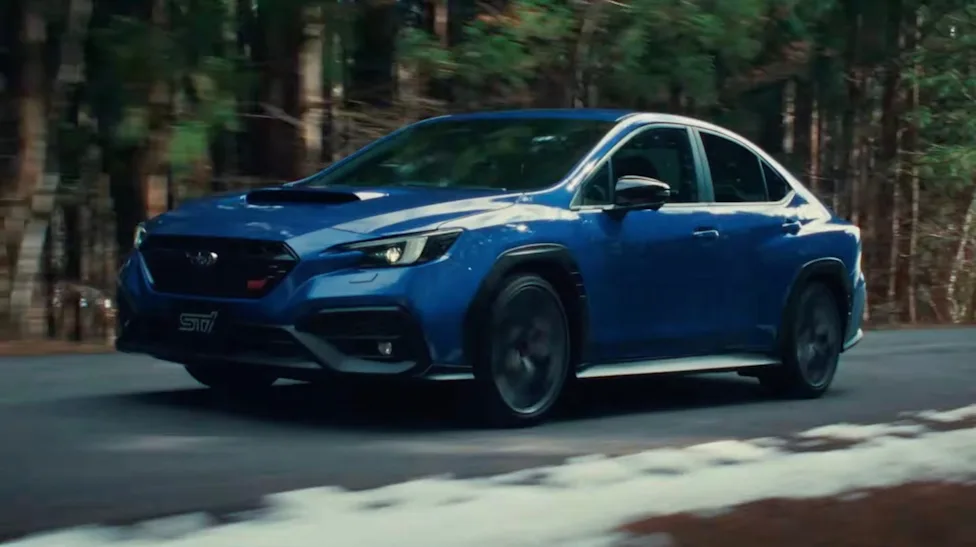
Moreover, the product planning strategies of automakers are rarely one-size-fits-all. Subaru of America has cultivated a distinct brand identity and product mix tailored to the preferences of the North American market. The WRX, in its various trims, has a dedicated following in the U.S., and discontinuing it would leave a significant void in the Subaru lineup. While Subaru is undoubtedly evaluating its future model portfolio, it is unlikely to abandon a nameplate with such strong brand equity without a compelling reason or a suitable successor. The fact that Subaru of America has yet to announce any changes to its WRX offerings further supports the notion that the U.S. market will continue to see the current generation, at least for the foreseeable future.
The timing of the Japanese discontinuation also offers valuable insights. With orders closing in May 2026 and the current model generation wrapping up, it aligns with the typical product lifecycle of a vehicle. Automakers typically refresh or redesign their models every five to seven years. The current generation of the WRX debuted for the 2022 model year, meaning it is now entering the latter stages of its lifecycle. This naturally leads to speculation about what comes next.
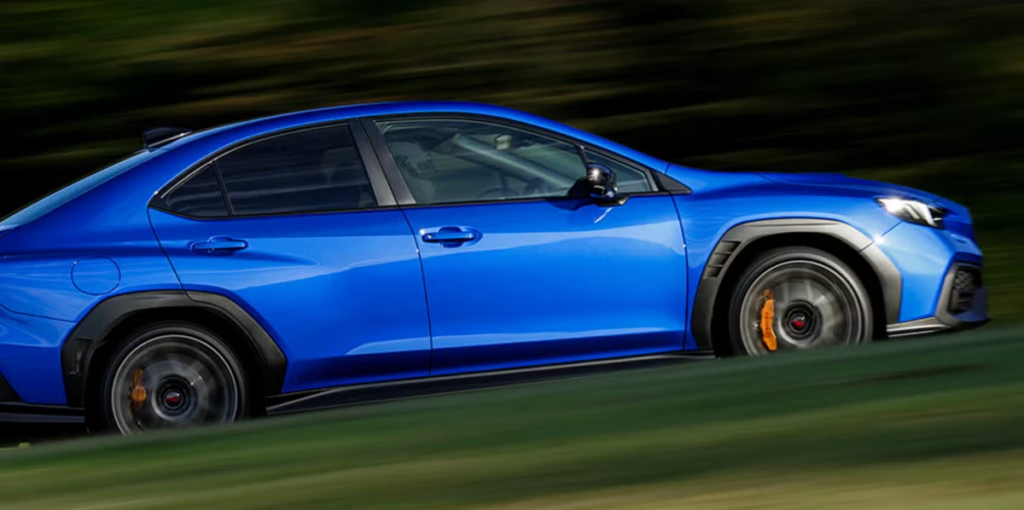
One of the most intriguing possibilities for the future of the WRX, particularly in the context of Subaru’s broader electrification strategy, is the potential for an electric successor. Subaru has announced ambitious electrification goals, including a target of having 50% of its global sales be fully electric by 2030. The company has already introduced its first all-electric vehicle, the Solterra, developed in partnership with Toyota. This strategic shift towards electrification suggests that future Subaru performance models, including a potential electric WRX, may leverage this new technological foundation.
The idea of an all-electric WRX may seem antithetical to the traditional identity of the car, which is deeply rooted in the visceral experience of turbocharged internal combustion and manual transmissions. However, the automotive industry is undergoing a fundamental transformation. Electric vehicles offer instant torque, which can provide a thrilling acceleration experience that rivals or even surpasses gasoline-powered counterparts. Furthermore, electric platforms allow for innovative weight distribution and handling characteristics, which could further enhance the WRX’s legendary driving dynamics.
The announcement of the WRX S4 STI S#, a limited-production, high-performance variant currently still listed as “coming soon” on Subaru’s Japanese website, also provides a glimpse into the company’s near-term plans. This model, limited to just 600 units, represents a final send-off for the current generation WRX in Japan. The fact that Subaru is allocating production to such a specialized model suggests a desire to honor the legacy of the gasoline-powered WRX before potentially transitioning to a new powertrain for future iterations.
Looking at the broader industry context, Subaru is not alone in navigating the challenges of electrification and evolving regulations. Many automakers are facing similar decisions regarding their performance models. Some manufacturers are opting for hybrid powertrains as a transitional technology, offering a blend of electric efficiency and internal combustion performance. Others are committing fully to electrification, developing dedicated EV platforms for their performance lineups. The path Subaru chooses for the next-generation WRX will be a telling indicator of its long-term strategy and its commitment to maintaining the spirit of the WRX in an increasingly electrified future.
The potential for a manual transmission in future WRX models, as hinted at by reports of orders resuming next year, is also a significant point of interest. While electrification is a dominant trend, there is a vocal segment of enthusiasts who value the engagement and control offered by a manual gearbox. If Subaru can successfully integrate a manual transmission into a future WRX, whether gasoline-powered or hybrid, it would be a significant nod to its loyal customer base and a differentiator in a market increasingly dominated by automatic transmissions.
The role of the WRX in Subaru’s overall brand identity cannot be overstated. For decades, the WRX has served as the halo car for the brand, demonstrating Subaru’s engineering prowess and its commitment to performance and safety. It has built a cult following through its participation in rally racing and its reputation for all-wheel-drive capability in adverse weather conditions. Maintaining this halo effect is crucial for Subaru’s brand perception, even as the company expands its portfolio into new segments and technologies.
The discontinuation of the WRX in Japan may also be influenced by production capacity and resource allocation. Subaru’s Gunma Plant, where the WRX is currently produced, is also home to other models, including the new Trailseeker EV. As Subaru ramps up its EV production, it may need to reconfigure its manufacturing operations to prioritize electric vehicle output. This could necessitate difficult decisions regarding the production of internal combustion engine models, even if they remain popular in certain markets.
While Subaru of America has yet to provide specific details about the future of the WRX in the U.S., industry analysts and enthusiasts will be closely watching for any signals regarding the next-generation model. The timing of the Japanese discontinuation suggests that a decision regarding the U.S. market is likely to be made in the coming months. Whether the next WRX will be an evolution of the current gasoline-powered model, a hybrid offering, or a fully electric successor remains to be seen. Each path presents its own set of opportunities and challenges, and the decision Subaru makes will ultimately shape the future of this iconic nameplate.
One factor that will undoubtedly play a significant role in this decision is market demand. The U.S. market has historically been a strong supporter of the WRX, and Subaru will need to assess whether this demand will translate to an electrified or hybrid version. The success of the Solterra will likely provide valuable data points in this regard, as it represents Subaru’s first foray into the EV market. The company will need to determine whether the EV technology it has developed is capable of delivering the performance and driving experience that WRX enthusiasts expect.
Furthermore, the competitive landscape in the U.S. will be a critical consideration. Other automakers are also developing performance EVs, and Subaru will need to ensure that its offering can compete effectively in terms of performance, price, and features. The EV market is rapidly evolving, with new players and technologies emerging constantly. Subaru will need to make a decision that positions the WRX for long-term success in this dynamic environment.
The potential for a hybrid WRX as a transitional model also warrants consideration. A hybrid system could allow Subaru to maintain the performance characteristics of the current WRX while also improving fuel efficiency and reducing emissions. This approach could be particularly attractive in the U.S. market, where there is still a significant appetite for internal combustion engines, albeit with a growing preference for more efficient powertrains.
Ultimately, the future of the Subaru WRX in the United States will depend on a complex interplay of regulatory pressures, technological advancements, market demand, and Subaru’s own strategic vision. While the discontinuation of the WRX in Japan is a significant development, it does not necessarily portend the end of the model in the U.S. The American market has a different set of priorities and preferences, and Subaru has a history of tailoring its product offerings to the specific needs of its customers.
As an industry insider