
The Curtain Falls on Tesla’s Originals: Model S and Model X Usher in a New Era of Automation
For over a decade, the Tesla Model S and Model X have stood as titans in the automotive landscape, not just a
 s vehicles, but as statements of intent. They were the vanguard, the initial whispers of a revolution that would ultimately redefine personal transportation. Now, as summer’s heat descends upon 2025, these pioneering electric vehicles are set to conclude their production runs. This isn’t a swan song of decline, but rather a strategic pivot, a calculated evolution driven by CEO Elon Musk’s vision for Tesla’s next frontier: advanced robotics and artificial intelligence.
The announcement signifies a dramatic reshaping of Tesla’s product portfolio. With the discontinuation of the Model S sedan and Model X SUV, the electric vehicle manufacturer’s offerings will be streamlined to the more compact Model 3 sedan, the ubiquitous Model Y SUV, and the recently introduced Cybertruck pickup. This strategic consolidation, while potentially raising questions for enthusiasts of the original flagships, is deeply rooted in Tesla’s ambitious expansion plans. The Fremont, California facility, long the heart of Model S and Model X assembly, is slated for a radical transformation. It will be retooled to become the epicentre of Optimus robot production, a testament to Tesla’s escalating investment in AI and sophisticated automation technologies.
A Legacy Forged in Innovation: The Enduring Impact of the Model S and Model X
To truly grasp the significance of this transition, one must look back to the genesis of these groundbreaking machines. The Model S, launched in 2012, was more than just an electric car; it was a paradigm shift. At a time when electric vehicles were often perceived as compromised, niche alternatives, the Model S arrived with an audacious proposition: luxury, performance, and substantial range, all powered by electricity. Its initial iteration, boasting 416 horsepower and a projected 300 miles of range (under the then-prevailing NEDC testing cycle), was a revelation. In 2013, Autocar’s assessment lauded the Model S as “the best car in its class,” awarding it a remarkable 4.5 stars. This accolade placed it leagues ahead of established luxury hybrids from stalwarts like Porsche, BMW, Mercedes-Benz, and Audi.
The original Autocar road test verdict vividly captured the Model S’s disruptive brilliance: “Of the half-dozen electric cars that we’ve road tested during the re-emergence of the EV, only two have managed to complete our full set of track tests, photo shoots and road assessments without the assistance of a trailer.” This spoke volumes about the nascent state of EV technology and highlighted the Model S’s remarkable self-sufficiency and robust engineering. The review continued, emphasizing Tesla’s astute understanding of the premium automotive market: “Finally, it seems, here’s a company that understands the workings of the automotive consumer. Small cars are already cheap and use very little fuel. So making an electric one of those work for everybody is going to be a very hard task, as their sales, or lack of, demonstrate. With a luxury car, though, Tesla has found it easier to gain price and performance parity with its rivals. It has been able to offer a vast range by fitting vast batteries and has found a customer base more open to the new technology and with more resources at their work and home to counter the drawbacks. Practical, refined and, above all, desirable, the Model S is a triumph.” This assessment remains remarkably prescient, underscoring how Tesla’s strategic focus on the high-end market, coupled with its commitment to battery technology and innovative features, laid the groundwork for its future dominance.
Following the Model S’s success, Tesla introduced the Model X in 2015. This distinctive SUV, characterized by its signature “falcon-wing” doors and the option for seven-seat configurations, was undeniably a derivative of its sedan sibling. While it may not have achieved the same class-leading status as the Model S – with early criticisms often citing a firm ride and some build quality inconsistencies – the Model X still carved out a significant niche. Its unique proposition and electric powertrain placed it ahead of many conventional SUV alternatives. Autocar’s road test verdict at the time acknowledged its singularity: “It is necessary once again – even with qualifications – to acknowledge that there is nothing else like the Model X.” This statement perfectly encapsulated the Model X’s distinctive appeal in a segment ripe for electrification.
The Plaid Era: Redefining Automotive Velocity
The advent of the Plaid variants marked a new zenith in performance for both models. The Model S Plaid, unleashed in 2021, arrived with Elon Musk’s bold claim of being the “quickest production car ever made of any kind.” Its advertised 0-60 mph time of a scarcely believable 1.99 seconds, while technically achieved with a slight ‘roll-out’ advantage, nonetheless sent shockwaves through the automotive world. Even when measured by Autocar’s rigorous stopwatch at a still-blistering 2.4 seconds, the Model S Plaid held the undisputed title of the fastest-accelerating car the publication had ever tested by August 2023. This astonishing feat propelled it past legendary hypercars, even outpacing the mighty Bugatti Veyron Supersport.
s vehicles, but as statements of intent. They were the vanguard, the initial whispers of a revolution that would ultimately redefine personal transportation. Now, as summer’s heat descends upon 2025, these pioneering electric vehicles are set to conclude their production runs. This isn’t a swan song of decline, but rather a strategic pivot, a calculated evolution driven by CEO Elon Musk’s vision for Tesla’s next frontier: advanced robotics and artificial intelligence.
The announcement signifies a dramatic reshaping of Tesla’s product portfolio. With the discontinuation of the Model S sedan and Model X SUV, the electric vehicle manufacturer’s offerings will be streamlined to the more compact Model 3 sedan, the ubiquitous Model Y SUV, and the recently introduced Cybertruck pickup. This strategic consolidation, while potentially raising questions for enthusiasts of the original flagships, is deeply rooted in Tesla’s ambitious expansion plans. The Fremont, California facility, long the heart of Model S and Model X assembly, is slated for a radical transformation. It will be retooled to become the epicentre of Optimus robot production, a testament to Tesla’s escalating investment in AI and sophisticated automation technologies.
A Legacy Forged in Innovation: The Enduring Impact of the Model S and Model X
To truly grasp the significance of this transition, one must look back to the genesis of these groundbreaking machines. The Model S, launched in 2012, was more than just an electric car; it was a paradigm shift. At a time when electric vehicles were often perceived as compromised, niche alternatives, the Model S arrived with an audacious proposition: luxury, performance, and substantial range, all powered by electricity. Its initial iteration, boasting 416 horsepower and a projected 300 miles of range (under the then-prevailing NEDC testing cycle), was a revelation. In 2013, Autocar’s assessment lauded the Model S as “the best car in its class,” awarding it a remarkable 4.5 stars. This accolade placed it leagues ahead of established luxury hybrids from stalwarts like Porsche, BMW, Mercedes-Benz, and Audi.
The original Autocar road test verdict vividly captured the Model S’s disruptive brilliance: “Of the half-dozen electric cars that we’ve road tested during the re-emergence of the EV, only two have managed to complete our full set of track tests, photo shoots and road assessments without the assistance of a trailer.” This spoke volumes about the nascent state of EV technology and highlighted the Model S’s remarkable self-sufficiency and robust engineering. The review continued, emphasizing Tesla’s astute understanding of the premium automotive market: “Finally, it seems, here’s a company that understands the workings of the automotive consumer. Small cars are already cheap and use very little fuel. So making an electric one of those work for everybody is going to be a very hard task, as their sales, or lack of, demonstrate. With a luxury car, though, Tesla has found it easier to gain price and performance parity with its rivals. It has been able to offer a vast range by fitting vast batteries and has found a customer base more open to the new technology and with more resources at their work and home to counter the drawbacks. Practical, refined and, above all, desirable, the Model S is a triumph.” This assessment remains remarkably prescient, underscoring how Tesla’s strategic focus on the high-end market, coupled with its commitment to battery technology and innovative features, laid the groundwork for its future dominance.
Following the Model S’s success, Tesla introduced the Model X in 2015. This distinctive SUV, characterized by its signature “falcon-wing” doors and the option for seven-seat configurations, was undeniably a derivative of its sedan sibling. While it may not have achieved the same class-leading status as the Model S – with early criticisms often citing a firm ride and some build quality inconsistencies – the Model X still carved out a significant niche. Its unique proposition and electric powertrain placed it ahead of many conventional SUV alternatives. Autocar’s road test verdict at the time acknowledged its singularity: “It is necessary once again – even with qualifications – to acknowledge that there is nothing else like the Model X.” This statement perfectly encapsulated the Model X’s distinctive appeal in a segment ripe for electrification.
The Plaid Era: Redefining Automotive Velocity
The advent of the Plaid variants marked a new zenith in performance for both models. The Model S Plaid, unleashed in 2021, arrived with Elon Musk’s bold claim of being the “quickest production car ever made of any kind.” Its advertised 0-60 mph time of a scarcely believable 1.99 seconds, while technically achieved with a slight ‘roll-out’ advantage, nonetheless sent shockwaves through the automotive world. Even when measured by Autocar’s rigorous stopwatch at a still-blistering 2.4 seconds, the Model S Plaid held the undisputed title of the fastest-accelerating car the publication had ever tested by August 2023. This astonishing feat propelled it past legendary hypercars, even outpacing the mighty Bugatti Veyron Supersport.
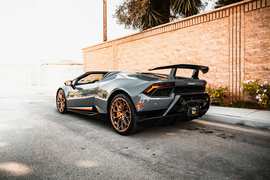 The legacy of the Tesla Model S Plaid as the quickest production car to 60 mph remains unbroken in our comprehensive road test history. While fierce competition has emerged from the all-electric Lotus Evija (clocking 2.8 seconds) and the hybrid Lamborghini Revuelto (achieving 2.5 seconds), the Model S Plaid’s initial sub-2.5-second sprint continues to define the pinnacle of automotive acceleration. This relentless pursuit of velocity, a hallmark of Tesla’s engineering prowess, has undeniably pushed the boundaries of what consumers expect from performance electric vehicles. The ongoing development in electric supercar performance and EV hypercar acceleration owes a considerable debt to the benchmark set by these Plaid models.
The Strategic Rationale: Beyond Production Lines
While the discontinuation of the Model S and Model X might appear abrupt to some, it is a move steeped in strategic foresight. These vehicles, though instrumental in establishing Tesla’s brand and technological leadership, represented a relatively small fraction of the company’s overall sales volume. In the preceding year, Tesla delivered fewer than 50,000 units of the Model S and Model X combined. In stark contrast, the more accessible Model 3 and Model Y models accounted for nearly 1.6 million deliveries. This stark disparity highlights the commercial imperative driving Tesla’s product evolution.
The pivot towards robotics and AI isn’t merely a diversification strategy; it’s a fundamental shift in Tesla’s operational focus. The company’s deep-rooted expertise in battery technology, electric powertrains, and sophisticated software development positions it uniquely to excel in the burgeoning fields of artificial intelligence and advanced robotics. The Optimus humanoid robot, envisioned as a versatile assistant capable of performing a wide range of tasks, represents a long-term vision for Tesla that extends far beyond automotive manufacturing. As the demand for AI-powered robots and industrial automation solutions continues to surge across various sectors, Tesla aims to leverage its technological prowess to become a leader in this new industrial revolution. This strategic realignment also involves significant investments in autonomous vehicle technology and the development of next-generation AI platforms. The insights gained from developing and deploying advanced software for their vehicles directly translate to the complex challenges of creating intelligent, adaptable robots.
The Future Landscape: New Frontiers and Evolving Expectations
The road ahead for Tesla is one of ambitious expansion and continuous innovation. The long-awaited production-ready Roadster is anticipated to make its debut soon, promising to reassert Tesla’s dominance in the high-performance electric sports car segment. Furthermore, the vision for the fully autonomous Cybercab, a vehicle devoid of traditional controls like steering wheels or pedals, is slated for a 2027 unveiling. This forward-thinking approach to future mobility solutions and fully autonomous driving technology underscores Tesla’s commitment to pushing the envelope of transportation possibilities. The potential for these advancements to impact urban transport systems and redefine personal transportation networks is immense.
For those interested in electric vehicle upgrades or exploring the latest in sustainable transportation solutions, the current landscape offers a diverse array of choices. While the Model S and Model X may be exiting the production stage, their impact on the electric vehicle market is undeniable. They paved the way for wider acceptance and accelerated the development of EV battery technology and charging infrastructure. The lessons learned from their development, particularly in areas of long-range EVs and performance EV charging, continue to inform the industry.
The transition represents a significant moment, not just for Tesla, but for the broader automotive and technology sectors. It’s a clear signal that the era of purely passenger vehicle manufacturing is evolving. As companies like Tesla increasingly invest in robotics manufacturing and artificial intelligence in industry, we are witnessing a fundamental reshaping of what it means to be an automotive manufacturer. The drive towards advanced manufacturing technologies and the integration of human-robot collaboration will likely become increasingly prevalent.
As we bid farewell to the production of the Model S and Model X, their legacy as trailblazers in the electric vehicle revolution is secured. They demonstrated that electric cars could be desirable, high-performing, and capable of challenging the established order. Their journey has undoubtedly inspired a new wave of innovation, from electric car sales trends to the development of eco-friendly vehicle options. The focus now shifts to Tesla’s next chapter, one that promises to be defined by advancements in AI, robotics, and the continued pursuit of a sustainable, technologically advanced future.
The legacy of the Tesla Model S Plaid as the quickest production car to 60 mph remains unbroken in our comprehensive road test history. While fierce competition has emerged from the all-electric Lotus Evija (clocking 2.8 seconds) and the hybrid Lamborghini Revuelto (achieving 2.5 seconds), the Model S Plaid’s initial sub-2.5-second sprint continues to define the pinnacle of automotive acceleration. This relentless pursuit of velocity, a hallmark of Tesla’s engineering prowess, has undeniably pushed the boundaries of what consumers expect from performance electric vehicles. The ongoing development in electric supercar performance and EV hypercar acceleration owes a considerable debt to the benchmark set by these Plaid models.
The Strategic Rationale: Beyond Production Lines
While the discontinuation of the Model S and Model X might appear abrupt to some, it is a move steeped in strategic foresight. These vehicles, though instrumental in establishing Tesla’s brand and technological leadership, represented a relatively small fraction of the company’s overall sales volume. In the preceding year, Tesla delivered fewer than 50,000 units of the Model S and Model X combined. In stark contrast, the more accessible Model 3 and Model Y models accounted for nearly 1.6 million deliveries. This stark disparity highlights the commercial imperative driving Tesla’s product evolution.
The pivot towards robotics and AI isn’t merely a diversification strategy; it’s a fundamental shift in Tesla’s operational focus. The company’s deep-rooted expertise in battery technology, electric powertrains, and sophisticated software development positions it uniquely to excel in the burgeoning fields of artificial intelligence and advanced robotics. The Optimus humanoid robot, envisioned as a versatile assistant capable of performing a wide range of tasks, represents a long-term vision for Tesla that extends far beyond automotive manufacturing. As the demand for AI-powered robots and industrial automation solutions continues to surge across various sectors, Tesla aims to leverage its technological prowess to become a leader in this new industrial revolution. This strategic realignment also involves significant investments in autonomous vehicle technology and the development of next-generation AI platforms. The insights gained from developing and deploying advanced software for their vehicles directly translate to the complex challenges of creating intelligent, adaptable robots.
The Future Landscape: New Frontiers and Evolving Expectations
The road ahead for Tesla is one of ambitious expansion and continuous innovation. The long-awaited production-ready Roadster is anticipated to make its debut soon, promising to reassert Tesla’s dominance in the high-performance electric sports car segment. Furthermore, the vision for the fully autonomous Cybercab, a vehicle devoid of traditional controls like steering wheels or pedals, is slated for a 2027 unveiling. This forward-thinking approach to future mobility solutions and fully autonomous driving technology underscores Tesla’s commitment to pushing the envelope of transportation possibilities. The potential for these advancements to impact urban transport systems and redefine personal transportation networks is immense.
For those interested in electric vehicle upgrades or exploring the latest in sustainable transportation solutions, the current landscape offers a diverse array of choices. While the Model S and Model X may be exiting the production stage, their impact on the electric vehicle market is undeniable. They paved the way for wider acceptance and accelerated the development of EV battery technology and charging infrastructure. The lessons learned from their development, particularly in areas of long-range EVs and performance EV charging, continue to inform the industry.
The transition represents a significant moment, not just for Tesla, but for the broader automotive and technology sectors. It’s a clear signal that the era of purely passenger vehicle manufacturing is evolving. As companies like Tesla increasingly invest in robotics manufacturing and artificial intelligence in industry, we are witnessing a fundamental reshaping of what it means to be an automotive manufacturer. The drive towards advanced manufacturing technologies and the integration of human-robot collaboration will likely become increasingly prevalent.
As we bid farewell to the production of the Model S and Model X, their legacy as trailblazers in the electric vehicle revolution is secured. They demonstrated that electric cars could be desirable, high-performing, and capable of challenging the established order. Their journey has undoubtedly inspired a new wave of innovation, from electric car sales trends to the development of eco-friendly vehicle options. The focus now shifts to Tesla’s next chapter, one that promises to be defined by advancements in AI, robotics, and the continued pursuit of a sustainable, technologically advanced future.
 The automotive world is in a constant state of flux, with new electric car models and innovative automotive technology emerging at an unprecedented pace. If you’re considering upgrading your current vehicle, exploring the latest in electric car technology, or seeking to understand the cutting edge of sustainable automotive solutions, the current market offers more compelling options than ever before. We invite you to explore the cutting edge of automotive innovation and discover how these advancements are shaping the way we move.