
Subaru’s Bold Leap: Introducing the 420-HP EV SUV Set to Redefine Family Adventure
The automotive landscape is undergoing a seismic shift, with electrification moving from a niche concept to the driving force of innovation. At the forefront of this transformation stands Subaru, a brand synonymous with rugged capability and unwavering reliability. Now, as the industry hurtles toward a fully electric future, Subaru is poised to make a definitive statement with the unveiling of its latest EV creation. Expected to debut at the prestigious 2026 New York Auto Show, this all-new electric SUV promises to blend Subaru’s legendary all-wheel-drive prowess with cutting-edge battery technology, delivering a vehicle that redefines the possibilities of family-friendly adventure.
For years, Subaru has cultivated a loyal following by offering vehicles that excel in challenging conditions, from snow-covered commutes to off-the-beaten-path explorations. While the brand has dipped its toes into the EV market with models like the Solterra and the concept-driven Uncharted, the upcoming reveal signals a significant escalation in its electric ambitions. This isn’t just another electric car; it’s a meticulously engineered machine designed to carry the torch of the Subaru legacy into the electric era, promising an experience that is both exhilarating and practical for the modern family.

The Tease: A Glimpse of What’s to Come
Subaru rarely reveals its hand prematurely, but for this highly anticipated model, the automaker has offered a tantalizing glimpse of what awaits. The initial teaser image, depicting a shrouded vehicle navigating a dramatic coastal road against a backdrop of sunrise or sunset, immediately evokes a sense of adventure and possibility. While the silhouette remains mysterious, key design elements are beginning to emerge, hinting at a vehicle that is both familiar and refreshingly new.
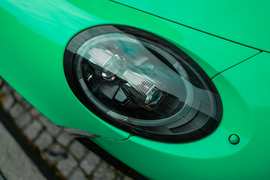
One of the most striking details is the signature six-pod daytime running light signature, a design cue that has become synonymous with Subaru’s electric identity. This visual thread connects the new SUV to its electric siblings, the Uncharted and the Solterra, while also hinting at a bolder, more refined execution. The illuminated front logo and roof rails further underscore the vehicle’s adventurous spirit, suggesting a design that is as functional as it is aesthetically striking.
Beyond the visual cues, Subaru has shared crucial details about the powertrain that are sure to excite driving enthusiasts and eco-conscious consumers alike. The confirmation of standard all-wheel drive immediately dispels any notions of a compromised driving experience. This is Subaru, after all, and the brand’s commitment to its iconic Symmetrical All-Wheel Drive system remains unwavering, even in the electric age. This setup, likely employing at least two electric motors, will deliver a combined output of 420 horsepower, positioning this new SUV as the most powerful production vehicle Subaru has ever offered.
The mention of the word “family” in the company’s press release, appearing twice, is a particularly telling detail. It suggests that this vehicle is not merely a performance-oriented EV but a thoughtfully designed family hauler. The implications are significant: this could be Subaru’s first three-row electric SUV, offering ample space for seven passengers and all their gear. This positioning directly addresses a growing demand in the market for larger electric vehicles that don’t sacrifice capability or driving dynamics.
The Road Ahead: What to Expect at the Reveal
The full story of this groundbreaking electric SUV will be unveiled at the 2026 New York International Auto Show, where Subaru will host the vehicle’s global debut. At 10 a.m. ET on Wednesday, April 1, the covers will come off, revealing not only the official name but also the full spectrum of features that will define this new era for Subaru. The questions that linger—the exact dimensions, the battery capacity, the charging architecture, and the full suite of technological innovations—will finally be answered.
From an industry perspective, the timing of this reveal is critical. 2026 marks a pivotal moment in the EV transition, with consumer adoption accelerating rapidly and competition intensifying. For Subaru to maintain its leadership position, this new electric SUV must deliver a compelling package that stands out in a crowded market. The 420-horsepower output and standard all-wheel drive are strong starting points, but the success of this vehicle will ultimately depend on its ability to integrate these performance credentials with the practicality and comfort that Subaru customers expect.
The EV landscape in 2026 is far more sophisticated than it was even a few years ago. Consumers are no longer simply looking for an electric alternative; they are seeking vehicles that can match or exceed the capabilities of their gasoline-powered counterparts. This includes considerations such as range, charging speed, interior space, and cargo capacity. Subaru’s success with this new SUV will hinge on its ability to deliver on all these fronts, while also maintaining the brand’s core identity of safety, reliability, and adventure.
Analyzing the Competitive Landscape
To fully appreciate the significance of Subaru’s move, it’s essential to consider the current state of the EV market. The mid-size and full-size SUV segments are fiercely competitive, with established players like Tesla, Ford, Hyundai, and Kia all vying for market share. Each brand brings its own unique strengths to the table, whether it’s Tesla’s charging infrastructure and software ecosystem, Ford’s F-150 Lightning-inspired ruggedness, or Hyundai’s innovative interior designs and efficient platforms.
For Subaru to carve out its own space in this crowded field, it must leverage its inherent advantages. The brand’s reputation for safety is unparalleled, and it’s likely that this new electric SUV will continue that tradition with advanced driver-assistance systems and robust structural engineering. Furthermore, Subaru’s loyal customer base, already deeply invested in the brand’s ecosystem, represents a significant advantage. Many Subaru owners are looking for an electric vehicle that aligns with their values and lifestyle, and this new SUV appears tailor-made to meet those needs.

The question of range will be a critical factor in the vehicle’s success. In 2026, consumers expect a minimum of 300 miles of range on a single charge, with many demanding 400 miles or more. Subaru has not yet disclosed the battery capacity or estimated range for this new SUV, but it’s safe to assume that the company is working with a platform that can deliver competitive figures. The choice of platform, whether it’s a third-party solution or an in-house development, will be telling in terms of Subaru’s long-term EV strategy.
Interior Design and Passenger Experience
While the exterior design and performance credentials are undoubtedly important, the interior experience will be a deciding factor for family-oriented buyers. In an era where the vehicle is increasingly viewed as a mobile living space, interior design and comfort are paramount. Subaru has a strong track record in this area, but the transition to electric powertrains allows for even greater innovation.
The potential for a three-row configuration opens up a world of possibilities for interior packaging. With the absence of a traditional transmission tunnel, designers can create a more open and flexible cabin layout. This could translate to increased legroom for second-row passengers, a more spacious third row, and enhanced cargo versatility. Features such as power-folding third-row seats, integrated child seat anchors, and abundant storage solutions will be essential for meeting the needs of modern families.
Beyond the physical dimensions, the interior design itself will play a crucial role in shaping the ownership experience. Subaru’s cabin designs have evolved significantly in recent years, moving away from purely utilitarian aesthetics toward a more sophisticated and technology-integrated approach. This new electric SUV will likely continue this trend, featuring a minimalist yet functional dashboard, a prominent infotainment display, and a seamless integration of digital and physical controls.
Technology and Connectivity
In 2026, an electric SUV is not just a mode of transportation; it’s a connected device. The integration of advanced technology will be a defining characteristic of Subaru’s latest offering. This includes not only the in-car infotainment system but also the vehicle’s connectivity with the broader digital ecosystem. Over-the-air updates, smartphone integration, and seamless navigation with real-time traffic and charging information will be standard expectations.
Subaru’s EyeSight driver-assistance technology has consistently been a benchmark in the industry, and it’s likely that the new electric SUV will feature an even more advanced iteration of this system. With the added processing power of an electric platform, Subaru can incorporate more sophisticated features, such as enhanced adaptive cruise control, more precise lane-keeping assistance, and advanced collision avoidance systems. The potential for semi-autonomous driving capabilities, while perhaps not fully realized at launch, will likely be part of the long-term vision for this platform.
The charging experience itself will also be a key technological consideration. The availability of fast-charging capabilities, capable of adding significant range in a short amount of time, will be essential for long-distance travel. Furthermore, the integration of the vehicle’s charging status with Subaru’s mobile app will allow owners to monitor their battery levels, plan routes with charging stops, and manage their charging schedule remotely.
Sustainability and Environmental Impact
As an electric vehicle, Subaru’s new SUV is inherently more environmentally friendly than its gasoline-powered counterparts. However, the brand has an opportunity to go beyond basic electrification and demonstrate a deeper commitment to sustainability. This could include the use of recycled materials in the interior, sustainable manufacturing processes, and a reduced carbon footprint throughout the vehicle’s lifecycle.
For Subaru, which has long championed the idea of being a good corporate citizen, this presents a chance to align its EV strategy with its core values. The company’s history of environmental initiatives, such as its long-standing partnership with the National Parks Conservation Association, provides a strong foundation for building a truly sustainable electric vehicle program. This commitment to sustainability will not