
Lamborghini’s Bold Pivot: Returning to the Grand Touring Roots with a Revolutionary Two-Door Concept

In the ever-evolving landscape of high-performance automotive engineering, Lamborghini has always stood as a beacon of Italian flair, blistering speed, and audacious design. For decades, the Sant’Agata Bolognese marque has captivated the world with its iconic mid-engined supercars—sleek, two-door machines that epitomize raw power and track-focused precision. Yet, as the automotive industry braces for a seismic shift towards electrification and evolving consumer preferences, Lamborghini finds itself at a critical crossroads. In a move that has sent ripples of excitement and anticipation throughout the global enthusiast community, CEO Stephan Winkelmann has unequivocally declared that the brand’s future success hinges on a strategic pivot: a definitive return to its genesis, the elegant and sophisticated world of grand touring.
The whispers have been circulating for months, gaining momentum with each passing automotive season. Now, with the dust settling on the 2026 automotive calendar, Lamborghini has laid its cards on the table, confirming that its much-anticipated fourth model line will not be another iteration of the wildly successful Urus SUV, nor a daring foray into the sedan segment, but rather a pure, unadulterated two-door GT (Gran Turismo). This strategic volte-face represents a deliberate de-emphasis on the utility-driven, high-riding body styles that have come to dominate the luxury segment, in favor of a form factor that harks back to the very DNA of the House of the Raging Bull.
A Deep Dive into Lamborghini’s Strategic Realignment
The decision to prioritize a traditional grand tourer over other potential body styles is a masterstroke of market timing and brand alignment. While the Urus SUV continues to generate substantial revenue and has successfully broadened Lamborghini’s market appeal, the brand’s soul has always resided in the realm of low-slung, driver-focused machinery. Winkelmann’s declaration at the prestigious 12 Hours of Sebring—one of motorsport’s most grueling endurance tests—was not merely a marketing soundbite; it was a definitive statement of intent, signaling a recalibration of Lamborghini’s identity.
“When we looked into the idea of the fourth model, we checked all the segments where we are not in and also the subsegments,” Winkelmann articulated with the clarity of a seasoned industry veteran. “We ruled out having a small SUV, and we also ruled out having a four-door sedan, because the segment is shrinking.” This candid admission underscores a pragmatic approach to product planning. The automotive landscape of the mid-2020s is a battlefield of shifting loyalties. While SUVs remain dominant, the market is fragmenting, with consumers increasingly seeking alternatives that offer a greater sense of occasion and driving engagement. By eschewing the saturated SUV market, Lamborghini sidesteps direct competition with its own Urus and preserves the exclusivity that defines its brand.
The allure of the sedan segment, while superficially tempting for its potential to capture a wider audience, presents significant challenges for a brand built on emotional design and visceral driving dynamics. “If you sell [a sedan], you sell almost only long-wheelbase cars, which are not looking that good on our type of cars,” Winkelmann noted, highlighting the aesthetic compromises inherent in four-door layouts for a brand synonymous with dramatic proportions. Lamborghini’s flirtation with sedan concepts, most notably the sharp-edged Estoque of 2008, proved to be a dead end, reinforcing the notion that the brand’s design language is intrinsically tied to two-door configurations.
The true significance of this strategic pivot lies in its nod to Lamborghini’s heritage. The two-door grand tourer is the archetypal Lamborghini, the very blueprint upon which the company was founded. In the early 1960s, Ferruccio Lamborghini, a visionary industrialist with a passion for speed, sought to challenge the established order of Italian automotive excellence, personified by Ferrari. His answer was not a race car in the purest sense, but a series of elegant, front-engined GTs—machines designed for high-speed continental touring, capable of devouring miles of scenic autostrada with effortless grace.
The 350 GT, Lamborghini’s inaugural production model, epitomized this philosophy. With its sleek, Pininfarina-penned bodywork, lush leather-trimmed interior, and a powerful V12 engine nestled beneath a long, sweeping hood, the 350 GT was a statement of intent. It was a car that prioritized comfort and style as much as outright performance, offering a compelling alternative to the more austere, track-focused offerings of its competitors. The subsequent 400 GT refined this formula, adding practicality with its 2+2 seating configuration—a nod to the very “2+2” designation now being applied to the forthcoming model—and further cementing Lamborghini’s reputation as a purveyor of sophisticated performance.
Rethinking the Lanzador: From Concept to Production Reality
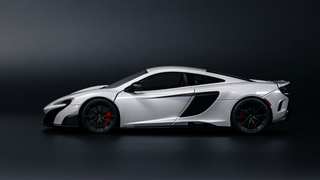
The strategic clarity provided by Winkelmann’s recent pronouncements casts a fascinating new light on the Lamborghini Lanzador concept, which debuted to considerable fanfare at the 2023 Concorso d’Eleganza Villa d’Este. For years, the Lanzador was widely assumed to be the harbinger of Lamborghini’s all-electric future, a preview of the brand’s first battery-powered production model slated for the end of the decade. However, the automotive landscape has shifted dramatically in the interim, prompting a significant recalibration of these expectations.
The global automotive industry, once firmly set on an all-electric trajectory, has encountered headwinds. Geopolitical uncertainties, supply chain volatility, and a growing consumer demand for diverse powertrain options have compelled many manufacturers to re-evaluate their electrification timelines. Lamborghini, ever pragmatic, has responded to these evolving market dynamics by postponing its full electrification strategy. This delay has necessitated a fundamental rethinking of the Lanzador’s purpose and positioning within the product portfolio.
Initially conceived as a pure EV, the Lanzador concept presented a bold vision of Lamborghini’s electric future. Its design language—characterized by sharp, angular lines, a low-slung silhouette, and a dramatic, fastback roofline—was a clear departure from the brand’s traditional supercar proportions, hinting at a more utility-focused orientation. The concept’s styling featured black cladding around the wheel arches and an elevated stance, evoking the high-riding proportions of a modern SUV or crossover. Underpinning this futuristic design was a modular electric platform, designed to accommodate dual electric motors providing all-wheel drive and a substantial battery pack promising significant range and performance capabilities.
However, the pivot towards a more traditional grand tourer philosophy, as articulated by Winkelmann, suggests that the production Lanzador will diverge significantly from its concept origins. The \”2+2 gran turismo\” designation points towards a lower, more conventional sports car architecture, eschewing the SUV-like characteristics of the concept. This strategic shift may involve a fundamental re-engineering of the vehicle’s platform, potentially utilizing an existing V12 hybrid architecture or a completely new modular platform that can accommodate the brand’s advanced hybrid powertrains.
The implications for the production model are profound. Instead of a battery-electric vehicle, the new GT will almost certainly feature a plug-in hybrid (PHEV) powertrain. This approach aligns perfectly with Lamborghini’s current electrification strategy, which prioritizes hybridization as a bridge to full electrification. The Urus SE, the brand’s first plug-in hybrid, has already demonstrated the successful integration of electric motors with Lamborghini’s V8 engines, delivering enhanced performance and efficiency. A PHEV GT would allow Lamborghini to retain the visceral sound and character of its combustion engines while incorporating electric propulsion for improved responsiveness and reduced emissions.
The production timeline for the new GT remains a subject of considerable speculation, with industry analysts predicting an on-sale date in the latter half of the decade, likely around 2029. This timeline allows Lamborghini ample time to refine the vehicle’s design, engineering, and packaging to meet the exacting standards of the grand touring segment. The intervening years will undoubtedly witness a steady trickle of teasers, spy shots, and official reveals as Lamborghini meticulously builds anticipation for what promises to be a landmark addition to its illustrious lineup.
The Return of the V12: A New Era of Hybrid Grand Touring
Central to the allure of the grand tourer genre is the symphony of the engine—a powerful, refined powerplant capable of delivering effortless acceleration and a captivating auditory experience. For Lamborghini, the V12 engine has long been the beating heart of its most iconic models, a symbol of unadulterated performance and engineering excellence. The strategic pivot towards a traditional GT necessitates a re-evaluation of the brand’s powertrain philosophy, and the V12 is poised to play a starring role in this new chapter.
The recent proliferation of plug-in hybrid powertrains across the Lamborghini lineup, including the Revuelto hybrid supercar and the aforementioned Urus SE, signals a clear direction for the brand’s short-to-medium-term future. These electrified models have demonstrated that hybridization can enhance performance rather than compromise it, delivering instant torque and improved efficiency without sacrificing the visceral driving experience that defines Lamborghini. It is highly probable that the forthcoming GT will leverage this expertise, adopting a sophisticated plug-in hybrid architecture that combines a high-revving V12 engine with advanced electric propulsion systems.
Such a configuration would represent a compelling evolution of the traditional grand tourer formula. The V12 engine, with its characteristic growl and linear power delivery, would provide the emotional core of the powertrain, while the electric motors would deliver instantaneous torque for seamless acceleration and enhanced fuel efficiency during cruising. This dual-nature powertrain would allow the GT to excel in both high-speed highway driving and spirited backroad excursions, embodying the very essence of the grand tourer