
The Shifting Sands of Electrification: Why Audi Believes Combustion Engines Have a Future Well into the 2030s
The automotive industry is currently navigating a period of unprecedented transition—a kind of purgatory between the promised electric revolution and the enduring reality of consumer preferences. What was once envisioned as a definitive shift toward battery electric vehicles (BEVs) by the mid-2020s has instead evolved into a complex, sputtering progress, leaving automakers with eclectic lineups that span the spectrum from traditional gas guzzlers to advanced hybrids and fully electric models. As the industry grapples with the uncertainties surrounding the timeline for electric powertrains to fully supplant internal combustion engines (ICE), the next decade is poised to be pivotal. During this era, manufacturers will be compelled to strategically allocate their development resources between gasoline and electric technologies.
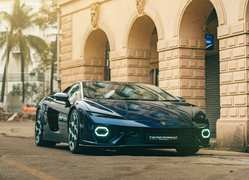
In an exclusive conversation with Car and Driver, Audi CEO Gernot Döllner provided candid insights into the company’s evolving strategy. His perspective underscores a belief that the current market dynamics—marked by faltering EV adoption rates and sustained consumer interest in gasoline-powered vehicles—necessitate a more flexible approach to powertrains. This flexibility, Döllner argues, will ultimately prove to be a significant advantage for the brand. Rather than abandoning ICE technology prematurely, Audi is focused on refining its existing powertrain architectures, emphasizing increased hybridization. Looking ahead, the company faces a critical decision in the early 2030s: whether to invest in developing entirely new platforms based on internal combustion technology or to commit fully to an electric-only future.
The U.S. Market’s Pendulum Swing Toward Combustion
While the trajectory of the automotive industry may seem uncertain, Audi’s leadership has clearly observed a significant shift in market sentiment, particularly in the United States. The initial surge in electric vehicle adoption, which had been steadily gaining momentum on the U.S. sales charts, experienced a dramatic reversal in the latter half of 2025. This downturn was largely precipitated by the elimination of the federal EV tax credit by the Trump administration. The sudden withdrawal of this significant financial incentive had a cascading effect, contributing to a cratering of EV sales toward the end of the year. Consequently, several major automakers have been compelled to reevaluate their strategies, leading to the pause or outright cancellation of future U.S.-bound electric vehicle programs.
Audi is keenly attuned to these changing market dynamics. As Gernot Döllner articulated, “The drivetrain concepts will definitely swing back to [internal combustion]. That’s what we see right now, and I don’t know if battery-electric will come back that fast.” This statement reflects a pragmatic acceptance of current consumer behavior, acknowledging that the transition to electric mobility is not progressing at the linear pace once anticipated. The implication is clear: any automaker seeking to maintain a leadership position must be prepared to cater to a market where gasoline-powered vehicles continue to hold significant appeal.
Geographical Nuances: China and Europe Forge Ahead
It is crucial to recognize that the shifting sentiment in the United States does not represent a universal trend. In stark contrast to the U.S. experience, sales of electric vehicles have continued to grow at a far more rapid pace in both China and Europe. This divergence in market development creates the potential for the United States to become something of a gas-powered outlier in a world that appears to be progressively moving away from internal combustion technology. However, Döllner does not view this development through a lens of isolation or fragmentation.
He emphasized the inherent dynamism of global markets, noting that “Markets are so dynamic, and every market has its specialty.” Döllner further elaborated on these regional differences, highlighting specific consumer preferences that shape each market’s automotive landscape. “The U.S. has these rugged SUV and pickup segments, [a] quite ICE-heavy consumer landscape,” he observed. In contrast, China, despite being a leader in battery electric adoption, is also witnessing a resurgence in interest in extended-range electric vehicles (EREVs) and even plug-in hybrids. This trend suggests that even in the most EV-forward markets, a degree of pragmatism regarding range and charging infrastructure persists. “There are a lot of dynamics,” Döllner concluded, “so it isn’t too easy to tell where the road is heading.”
The strategic implications of these geographical differences are profound. With various markets evolving at markedly different speeds, Audi has made the strategic decision to scale back its previous commitment to an all-electric lineup by 2033. While the U.S. market’s recalibration has been a significant factor in this decision, Döllner does not perceive this development as rendering the U.S. irrelevant to Audi’s global strategy. Instead, he posits that the necessity of maintaining a diverse approach to powertrains will yield broader benefits for a global brand like Audi. “I don’t see an island,” he asserted, “I just see that we need the flexibility anyhow.” This underscores the value of adaptability in a world where consumer demands and regulatory landscapes can shift with unexpected rapidity.
Refining Existing Architectures: The Path of Hybridization
For the immediate future, Audi’s strategy is centered on the refinement of its current powertrain platforms. The focus is on enhancing both gasoline-only and hybrid configurations rather than embarking on the development of entirely new architectures. “I don’t see necessarily new platforms,” Döllner explained, “But I see further development of platforms to bring the next level of electronics and bring some degree of more hybridization.” This approach allows Audi to leverage its existing engineering investments while responding to market demands for improved efficiency and reduced emissions. The emphasis on hybridization is particularly noteworthy, as it represents a middle ground between pure internal combustion and full electrification, offering consumers a tangible bridge toward a more sustainable future without the range anxiety often associated with BEVs.

The Evolution of Compact Segments
One notable exception to Audi’s broader strategy of refining existing platforms involves its compact vehicle offerings. Models such as the A3 and any vehicles smaller than that are expected to transition toward an all-electric configuration sometime in the early 2030s. This shift is primarily being driven by regulatory pressures and consumer preferences in China and Europe, markets where the demand for smaller, more efficient electric vehicles is more pronounced.
However, a more significant decision regarding Audi’s core powertrain strategy is looming on the horizon. Döllner indicated that a crucial determination will need to be made in the early 2030s. “Maybe that decision would have to be taken at the beginning of the ’30s,” he stated, “if we see that there is still that demand, especially in the U.S., regarding combustion engines, then we will have to think about a next-generation platform for combustion engine cars.” This suggests that if the U.S. market continues to exhibit a strong preference for gasoline-powered vehicles, Audi may indeed invest in developing a new generation of ICE platforms to meet that demand.
A Continued Belief in a Two-Pronged Strategy
Despite the evolving market dynamics, Döllner remains steadfast in his conviction that Audi’s current two-pronged approach to powertrains is the correct one. “We decided to have specific platforms for battery-electric and combustion engines,” he affirmed, “and I still believe that’s the right way to move. Too many compromises otherwise.” This perspective highlights the inherent trade-offs involved in automotive engineering. Developing a single platform that can effectively accommodate both ICE and EV powertrains without significant compromises in performance, efficiency, or packaging is an exceedingly difficult technical challenge. By maintaining separate platforms, Audi can optimize each technology for its specific application, thereby delivering a superior product to consumers.
Future Horizons: Supercars and Rugged SUVs
The question of whether Audi’s ongoing commitment to internal combustion technology might pave the way for the return of the iconic R8 supercar has naturally arisen among enthusiasts. A rumor from the previous year had suggested that Audi might develop a successor to the R8, potentially sharing its hybrid V-8 powertrain with the Lamborghini Temerario. While Döllner stopped short of confirming a new supercar, he did not entirely rule out the possibility. “That’s someday thinkable,” he mused, before offering a broader vision for the brand’s future product portfolio.
Döllner envisions a day when Audi offers a comprehensive range of vehicles that cater to diverse consumer needs and preferences. “I can imagine an Audi from the A2, [a] very efficient city car, to a super sports car,” he stated. This vision extends to the SUV segment as well, encompassing everything “from a small SUV to a rugged SUV in the U.S., that would also fit the Audi brand.” This suggests that Audi’s future product strategy will be characterized by breadth and diversity, rather than a narrow focus on a single powertrain type.
The prospect of a rugged, off-road-focused SUV aligns with recent industry speculation. A report from the previous year had indicated that such a model could potentially be based on the Scout platform, a testament to Audi’s exploration of new market segments. As Döllner concluded, “We are evaluating what are the next steps to take,” underscoring the company’s ongoing commitment to innovation and market responsiveness.
Conclusion: A Balanced Approach to a Dynamic Future

The automotive landscape of 2026 is one of considerable flux, characterized by shifting consumer preferences and evolving technological imperatives. Audi’s leadership, as articulated by CEO Gernot Döllner, reflects a pragmatic understanding of these dynamics. The company’s decision to maintain a flexible, two-pronged approach to powertrains—embracing both internal combustion and electrification—positions it well to navigate the uncertainties of the coming decade. By continuing to refine its existing platforms and selectively developing new ones, Audi can deliver compelling products that meet the diverse needs of its global customer base. The future of the automotive industry will undoubtedly be shaped by technological innovation, but it