
Electrifying a Comeback: Buick Eyes Sedan Return to U.S. Shores in 2026
The automotive landscape of 2026 is a study in contrasts. On one hand, consumers are flocking to SUVs and trucks with an almost religious fervor, drawn by the promise of space, safety, and a commanding view of the road. Yet, whispers of a different future are beginning to echo through the industry—a future where style, efficiency, and driving pleasure might once again reclaim their rightful place in the American garage. For Buick, a brand historically synonymous with comfortable cruising and quiet confidence, these whispers may be coalescing into a tangible plan. After a hiatus stretching back to the discontinuation of the Regal after the 2020 model year, General Motors is reportedly considering a dramatic pivot: the return of a Buick sedan to the United States market.
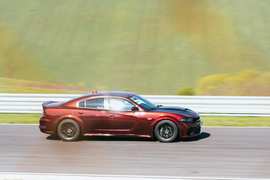
This potential resurrection is not merely a nostalgic nod to the past; it is a strategic gambit born from a rapidly evolving industry. As the U.S. transitions toward an electrified future, the traditional boundaries between vehicle segments are blurring. The very platforms that underpin tomorrow’s electric vehicles (EVs) are proving versatile enough to support a range of body styles, challenging the long-held assumption that the sedan is a relic of a bygone era. Buick, a brand that has long prided itself on offering attainable luxury and a sophisticated driving experience, stands at a fascinating crossroads. Will it double down on its successful SUV strategy, or will it dare to reignite the flame of the four-door sedan, potentially electrifying its way back into the hearts of American drivers?
The Allure of the Alpha II: A Platform Reimagined for the Modern Sedan
At the heart of this potential sedan revival lies a piece of GM engineering that has proven its mettle time and again: the Alpha II platform. This rear-wheel-drive architecture, renowned for its balanced weight distribution and dynamic handling characteristics, has been the foundation for some of Cadillac’s most critically acclaimed sedans. While the CT4—a key occupant of the Alpha II family—is slated to cease production in 2026, its successor and the venerable CT5 continue to leverage this exceptional chassis. The fact that GM is evaluating existing platforms for a new Buick sedan suggests a desire to minimize development costs and accelerate time-to-market, a critical factor in the hyper-competitive 2026 automotive landscape.
The implications of utilizing the Alpha II platform extend far beyond simple cost savings. It signals a commitment to a certain level of driving dynamics that would distinguish a new Buick sedan from its front-wheel-drive-based competitors. A rear-wheel-drive architecture inherently lends itself to a more engaging driving experience, offering superior steering feel and handling precision—qualities that were once the hallmarks of the Buick brand. Furthermore, the Alpha II platform’s inherent scalability makes it an ideal candidate for electrification. GM has already demonstrated its ability to integrate battery technology and electric powertrains into this architecture, as evidenced by the Cadillac Celestiq. This existing expertise suggests that a new Buick sedan could arrive not as a transitional gasoline-powered model, but as a cutting-edge EV, aligning with the broader industry trend toward electrification.
Global Inspiration: Lessons from Buick’s International Success
While North America has largely moved on from sedans, Buick’s international markets, particularly China, offer a compelling blueprint for what could be possible in the United States. The automaker continues to field a diverse range of sedans globally, from the well-established Regal and LaCrosse to the more recent Electra L7, a plug-in hybrid model that has garnered attention for its blend of efficiency and range. These international successes demonstrate that there is a global appetite for Buick sedans, even if the North American market’s preferences have shifted. The key differentiator, however, may lie in the powertrain and positioning of these vehicles.
The Electra L7, in particular, represents a fascinating case study. Its range-extender plug-in hybrid powertrain addresses one of the primary concerns surrounding the transition to EVs: range anxiety. By combining a gasoline engine that acts as a generator with an electric motor for propulsion, the Electra L7 offers the benefits of electric driving for daily commutes while providing the flexibility of gasoline for longer journeys. This approach could prove particularly attractive to American consumers who are considering an EV but are not yet ready to commit to a fully electric vehicle. Moreover, the success of models like the LaCrosse in China suggests that a well-executed, comfortable, and technologically advanced sedan can still find a receptive audience, even in a market saturated with SUVs. The lesson for Buick in 2026 may be that the form factor is less important than the execution.
Navigating the SUV Dominance: A Niche Strategy for the Modern Sedan
The elephant in the room for any discussion of a new Buick sedan in 2026 is the overwhelming dominance of the SUV segment. American consumers have embraced SUVs for their perceived safety, utility, and commanding driving position. To succeed where the Regal ultimately faltered, a new Buick sedan would need to offer something truly compelling—something that transcends the traditional sedan value proposition. This is where the electrification strategy becomes paramount.
A fully electric Buick sedan, potentially leveraging the advanced Ultium battery platform that underpins GM’s latest EVs, could position itself as a premium, tech-forward alternative to traditional gasoline-powered sedans. In 2026, consumers are increasingly drawn to vehicles that offer not only sustainable transportation but also seamless integration with their digital lives. A new Buick EV sedan could excel in areas where its predecessors struggled, offering advanced driver-assistance systems, over-the-air software updates, and a user interface that is both intuitive and sophisticated. By focusing on these areas, Buick could create a vehicle that appeals to a different segment of the market—one that values driving engagement and technological innovation over sheer size and utility.
Furthermore, the price point of a new Buick sedan would be critical. To compete effectively, it would likely need to be positioned below the Cadillac CT5, offering a more attainable entry point into the world of premium rear-wheel-drive vehicles. This could create a compelling value proposition for consumers who are looking for something more engaging than a mainstream EV but are not ready for the price tag of a Cadillac. The success of the Kia EV6 and Hyundai Ioniq 5 in 2026 demonstrates that there is a growing market for stylish, well-equipped EVs that offer a distinct alternative to traditional sedans.
The Wildcat EV Concept: A Glimpse into Buick’s Design Future
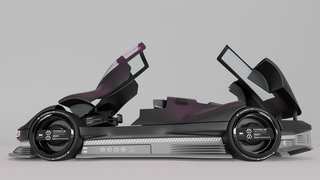
While the Buick Wildcat EV concept, first unveiled in 2022, may never see production in its current form, it offers a tantalizing glimpse into the automaker’s evolving design language. The concept’s sleek, low-slung profile and aggressive stance represent a departure from Buick’s more conservative styling of the past. The concept’s design cues, which blend classic Buick proportions with modern aerodynamic principles, could serve as the foundation for a new production sedan.
The Wildcat EV concept also highlighted Buick’s commitment to electrification and its vision for the future of the brand. The concept’s fully electric powertrain, combined with its luxurious and tech-forward interior, signaled that Buick is serious about competing in the EV space. While a production sedan would undoubtedly need to be scaled back in terms of size and complexity, the design philosophy behind the Wildcat EV concept could provide a strong foundation for a new four-door model. The challenge for Buick in 2026 will be to translate the Wildcat’s bold design into a practical, production-ready sedan that can compete in the North American market.
Market Dynamics and Competitive Pressures in 2026
The automotive market of 2026 is a complex and highly competitive environment. Several factors could influence Buick’s decision to reintroduce a sedan. On one hand, the continued strength of the SUV market and the high demand for trucks may make it difficult for a sedan to gain traction. However, the increasing saturation of the EV market could create an opportunity for a new player to carve out a niche.
GM faces stiff competition from a growing number of EV startups and legacy automakers who are all vying for market share. The success of Tesla in the sedan segment, with the Model 3 and Model S, demonstrates that there is a significant appetite for premium EVs. Furthermore, traditional automakers like Ford and GM’s own Cadillac division are rapidly expanding their EV lineups. To stand out in this crowded market, a new Buick sedan would need to offer a unique value proposition—something that differentiates it from the competition.
Another critical factor is the economic climate of 2026. As interest rates continue to fluctuate and consumer spending power is tested, the demand for more affordable, efficient vehicles could rise. A well-executed, reasonably priced EV sedan could fill this gap in the market, offering a compelling alternative to larger, more expensive SUVs.
The Path Forward: Strategic Considerations for a Sedan Revival
For Buick to successfully reintroduce a sedan to the U.S. market, several strategic considerations must be addressed. First and foremost is the powertrain. Given the industry trends and consumer preferences in 2026, a fully electric or advanced plug-in hybrid powertrain would be essential. A gasoline-only model would likely struggle to compete in the long term.
Second, the vehicle’s positioning would need to be carefully calibrated. It could target the entry-level luxury segment, competing with vehicles like the Genesis G70 and the BMW 2 Series Gran Coupe. Alternatively, it could be positioned as a more premium, tech-focused offering, competing with the Tesla Model 3 and Polestar 2. The choice of positioning would significantly influence the vehicle’s design, features, and target audience.
Third,