🔻 WATCH FULL VIDEO BELOW🔻
The Legacy of the 1957 Jaguar XKSS: Steve McQueen’s Iconic Ride
In the pantheon of automotive legends, few names resonate with the same cultural weight as Steve McQueen. Known affectionately as the “King of Cool,” McQueen’s larger-than-life persona was intrinsically linked to his passion for speed, performance, and iconic machinery. Among his legendary fleet, the 1957 Jaguar XKSS stands out—a rare, race-bred machine that perfectly encapsulated McQueen’s rebellious spirit and refined taste. This article delves into the history of this automotive masterpiece, its connection to McQueen, and its enduring legacy in the modern era.
The Genesis of an Icon: From Le Mans to the Road
The story of the 1957 Jaguar XKSS begins on the world’s most demanding race circuits. Jaguar, a titan of 1950s motorsports, dominated the 24 Hours of Le Mans with its legendary D-Type racer. This competition pedigree, however, created an unforeseen challenge for the British manufacturer.
Following the 1957 racing season, Jaguar found itself with 25 unsold D-Type chassis. These weren’t ordinary cars; they were purpose-built racing machines featuring advanced aluminum monocoque construction, race-tuned XK engines, and aerodynamic bodies penned by the visionary Malcolm Sayer. However, with the evolving regulations and the rise of newer competitors, the D-Type was becoming obsolete on the track.
Instead of letting these high-performance chassis gather dust, Jaguar conceived a brilliant solution: convert them into road-legal sports cars. This transformation birthed the Jaguar XKSS, a vehicle that blurred the lines between race car and grand tourer. The conversion process involved several key modifications to make the D-Type street-legal. A full-width windscreen replaced the aerodynamic Perspex aeroscreen, side curtains were added for weather protection, and a functional soft top was fitted. Bumpers, headlights, and a more street-appropriate exhaust system were also incorporated.
The result was a car that retained the D-Type’s exhilarating performance while offering a degree of usability for road use. With around 250 horsepower from its 3.4-liter inline-six engine and a curb weight of just over 2,000 pounds, the XKSS was blisteringly fast for its time. Its production run was limited to just 16 examples, making it one of the rarest and most exclusive Jaguars ever built.
Steve McQueen and the “Green Rat”
It was this very rarity and performance that attracted Steve McQueen. By the late 1950s, McQueen was already a rising star in Hollywood, known for his rugged good looks and rebellious persona. He was an avid car enthusiast with a penchant for acquiring fast and exotic machinery.
McQueen’s first encounter with the XKSS occurred in 1958 when he spotted one parked on a studio lot in Hollywood. The car, originally painted in white, caught his eye immediately. He purchased it shortly thereafter, reportedly for $4,000. This marked the beginning of a long and storied relationship between the actor and the car.
The XKSS soon became one of McQueen’s most iconic possessions. He famously repainted the car in British Racing Green, earning it the affectionate nickname “The Green Rat.” Under the care of his friend and customizer Tony Nancy, the interior was reupholstered in black leather, and famed pinstriper Von Dutch added a custom metal glovebox door to prevent his sunglasses from flying out during spirited drives.
McQueen’s ownership of the XKSS was defined by his legendary midnight drives through the Hollywood Hills. Along with fellow enthusiasts like Bruce Brown and Bud Ekins, he would tear through the winding roads of Mulholland Drive, testing the car’s limits under the cover of darkness. These escapades became the stuff of legend, solidifying the car’s association with McQueen’s daredevil image.
The XKSS wasn’t just a showpiece for McQueen; he genuinely loved to drive and maintain it. Photographs from the era show him working on the car himself, demonstrating his hands-on approach to his automotive passions. This authentic connection to his machines set him apart from many celebrities who simply collected cars as status symbols.
McQueen’s XKSS remained with him until the late 1960s when he sold it to automotive magnate William F. Harrah for his renowned collection in Reno, Nevada. However, McQueen’s affection for the car never waned. After more than a decade, he repurchased it in the late 1970s, keeping it until his untimely death in 1980.
The Enduring Legacy of the 1957 Jaguar XKSS
Following McQueen’s passing, the XKSS passed through several prominent collections. In 1984, it was sold at auction to Richard Freshman, a longtime friend from McQueen’s early Hollywood days. Freshman commissioned a meticulous restoration by Lynx in England, ensuring that McQueen’s modifications were preserved while the car was brought back to concours quality.
In 2000, the car was acquired by Robert E. Petersen, the founder of MotorTrend and the Petersen Automotive Museum. The museum now proudly displays the “Green Rat,” allowing the public to admire the very car that McQueen drove on his legendary midnight runs.
The 1957 Jaguar XKSS has transcended its status as a mere collector’s item to become a cultural icon. Its rarity—only 16 were built—combined with its Steve McQueen provenance, makes it one of the most desirable and valuable Jaguars in existence. Estimates place its value in the millions of dollars, a testament to its storied history and automotive excellence.
For Jaguar enthusiasts, the XKSS represents the pinnacle of 1950s sports car engineering. It embodies the golden era of Le Mans racing and the innovative spirit of a manufacturer at the height of its powers. The car’s timeless design, characterized by its voluptuous curves and purposeful stance, remains captivating even by today’s standards.
Reimagining the Legend: A Modern Interpretation
While the original 1957 Jaguar XKSS remains a coveted artifact of automotive history, the question inevitably arises: what would a modern-day XKSS look like? To answer this, MotorTrend’s team of designers and engineers envisioned a contemporary interpretation of McQueen’s favorite car.
The result is a stunning concept that bridges the gap between vintage racing heritage and modern automotive technology. Our reimagined XKSS is smaller, lighter, and more driver-focused than today’s XKR production models. It pays homage to the original’s design language while incorporating contemporary styling cues, drawing inspiration from Jaguar’s R Coupe concept of 2001.
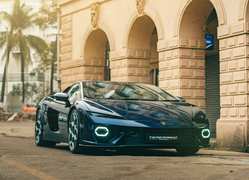
The exterior design blends traditional XKSS proportions with modern aerodynamic principles. The iconic long hood and flowing fenders are present, but rendered with sharper lines and more aggressive surfacing. LED lighting elements and sculpted air intakes hint at the car’s contemporary engineering.
Inside, the cabin merges classic XKSS elements with modern ergonomics. The driver-focused cockpit features high-quality materials, including rich leather and polished aluminum, but eschews unnecessary gadgets in favor of pure driving engagement. The seating position is low and purposeful, offering a commanding view of the road ahead.
Powering this modern interpretation is a high-output, naturally aspirated version of Jaguar’s acclaimed AJ-V8 engine. We envision a 4.5-liter displacement producing between 400 and 450 horsepower, paired with a six-speed manual transaxle for ultimate driver control.
In terms of size, the modern XKSS slots between a BMW Z4 and Z8, striking a perfect balance between agility and stability. It utilizes Jaguar’s latest aluminum-intensive construction, ensuring a lightweight yet incredibly stiff chassis. This combination of power, lightweight construction, and driver-focused dynamics would make it a true successor to McQueen’s original.
The Driving Experience: A Return to Mulholland
To fully appreciate the spirit of the original XKSS, we took our modern interpretation for a spin on the very roads McQueen once dominated—Mulholland Drive. As the sun set over the Hollywood Hills, we channeled the “King of Cool” and explored the legendary curves that once bore witness to his midnight escapades.
The drive confirmed that the modern XKSS lives up to its heritage. The supple yet responsive suspension handles the road’s undulations with grace, while the powerful V8 engine delivers exhilarating acceleration. The manual transmission provides a tactile connection to the driving experience, allowing for precise gear changes that keep the engine in its optimal powerband.
Around every corner, the car feels alive and eager, inspiring confidence and inviting spirited driving. The steering is direct and communicative, feeding back road information through the wheel. It’s a car that demands your attention and rewards it with an intoxicating blend of performance and engagement.
While we couldn’t quite replicate McQueen’s legendary speeds—safety regulations and the car’s $2-2.5 million value today necessitate a more measured approach—we captured the essence of his driving style. The exhilarating sound of the exhaust echoing through the canyons, the feeling of being connected to the machine, and the sheer joy of driving on one of the world’s most iconic roads—it was all there.
The modern XKSS proves that the spirit of McQueen’s legendary ride can live on through contemporary engineering and design. It’s a car that respects its heritage while embracing the future, offering an experience that would undoubtedly earn the approval of the “King of Cool” himself.
The Enduring Appeal of a Legend
The 1957 Jaguar XKSS and its legendary owner, Steve McQueen, continue to captivate automotive enthusiasts decades after their prime. The car represents a perfect storm of racing pedigree