The 2015 Dodge Charger SRT Hellcat: America’s 707-HP Supercharged Sedan Redefines Automotive Excess
In the pantheon of American muscle cars, few names command the respect and awe of the Dodge Charger SRT Hellcat. When this beast roared onto the scene in 2015, it didn’t just challenge the status quo; it obliterated it. With a staggering 707 horsepower unleashed from a supercharged HEMI V-8, the Hellcat redefined what was possible in a production sedan, solidifying its legacy as a true automotive legend.
For automotive enthusiasts and industry insiders, the arrival of the 2015 Dodge Charger SRT Hellcat represented a watershed moment. It was a bold declaration that the era of the American muscle car was far from over—it was simply evolving. This wasn’t just about straight-line speed; it was about blending the raw, visceral thrill of a drag strip dominator with the practicality of a four-door sedan. The result was a vehicle that defied categorization, demanding respect from rivals and igniting the imaginations of drivers worldwide.
The Birth of a Legend: Unveiling the 707-HP Supercharged HEMI
The cornerstone of the 2015 Charger SRT Hellcat’s legend is its revolutionary powertrain. At its heart lies a supercharged 6.2-liter HEMI V-8 engine, a marvel of engineering that produces a breathtaking 707 horsepower and 650 lb-ft of torque. This power plant, code-named Project 626, was a game-changer for Dodge, transforming the Charger from a capable performance sedan into a genuine supercar contender.
For automotive insiders, the significance of this engine cannot be overstated. The supercharged HEMI wasn’t just a tweaked version of Dodge’s traditional V-8; it was a complete reimagining, designed from the ground up to handle the immense pressures of forced induction. The engineers at SRT (Street & Racing Technology) incorporated a massive IHI twin-screw supercharger capable of pushing up to 11.6 pounds of boost into the cylinders. This, combined with high-performance forged internals and a specially designed air intake system, allowed the Hellcat to produce more power than any production sedan in history at the time.
Performance Metrics That Shattered Expectations
The raw numbers behind the 2015 Charger SRT Hellcat are nothing short of astonishing. With a claimed top speed of 204 mph, it earned the title of the fastest production sedan ever built. This figure alone was enough to send shockwaves through the industry, challenging the dominance of European exotics and proving that American engineering could compete on the world stage.
At the drag strip, the Hellcat delivered performance metrics that left competitors in the dust. The 2015 Charger SRT Hellcat could rocket from 0 to 60 mph in a blistering 3.7 seconds, a feat that rivaled dedicated sports cars. The quarter-mile was dispatched in a remarkable 11.8 seconds at 124.3 mph, showcasing the car’s incredible acceleration capabilities. Even the legendary Ferrari 488 GTB of the era couldn’t match these numbers, highlighting the sheer audacity of Dodge’s achievement.
While the 2015 Charger SRT Hellcat might not have been the absolute quickest off the line—the all-wheel-drive Tesla Model S P85D claimed that title—it offered a different kind of performance. The Hellcat’s power was delivered in a raw, unfiltered manner that was intoxicatingly visceral. There were no electronic nannies smoothing out the experience; there was just the thunderous roar of the supercharged V-8 and the surge of acceleration that pressed you deep into the leather seats.

The Charger’s Secret Weapon: Bridging Performance and Practicality
What truly set the 2015 Charger SRT Hellcat apart from its two-door sibling, the Challenger, was its four-door configuration. This seemingly simple difference transformed the Hellcat from a niche muscle car into a legitimate contender for the title of the ultimate performance sedan. Suddenly, drivers could experience supercar-level performance without sacrificing the practicality of a four-door vehicle.
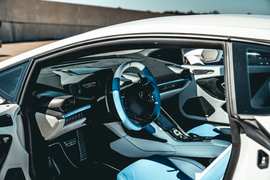
This duality was evident in every aspect of the Charger Hellcat’s design. Underneath its aggressive exterior—complete with a vented hood, distinctive front grille, and menacing stance—lay a surprisingly comfortable and spacious interior. The Black Nappa leather with Ruby Red Alcantara seat inserts provided a luxurious backdrop for the performance-oriented cabin, while the Uconnect system with an 8.4-inch touchscreen offered modern connectivity and navigation features.
For automotive industry insiders, this blend of performance and practicality was the Hellcat’s masterstroke. It appealed to a broader audience than the Challenger, attracting buyers who needed the functionality of a sedan but craved the thrill of a muscle car. The 2015 Charger SRT Hellcat became the perfect vehicle for the discerning enthusiast who wanted to make a statement without compromising on everyday usability.
Handling Dynamics: More Than Just Straight-Line Speed
While the 2015 Charger SRT Hellcat’s acceleration numbers were certainly headline-worthy, its handling capabilities were equally impressive. Dodge engineers didn’t just pour power into this sedan; they meticulously tuned the suspension, steering, and braking systems to deliver a balanced and confidence-inspiring driving experience.
Around the skidpad, the Charger Hellcat pulled an average of 0.94g, matching its Challenger sibling despite being larger and heavier. This demonstrated the effectiveness of the SRT engineers’ suspension tuning, which utilized adaptive damping and a performance-tuned chassis to keep the car planted through corners. The 20-by-9.5-inch forged wheels wrapped in 275/40R20 Pirelli P Zero tires provided tenacious grip, allowing the Hellcat to carve through turns with surprising agility.
The Brembo brakes, with their massive rotors and calipers, were another testament to the car’s performance-oriented design. The Charger Hellcat could stop from 60 mph in a mere 104 feet, a remarkable achievement for a vehicle weighing over 4,500 pounds. This braking prowess instilled confidence in drivers, allowing them to push the car harder on both the street and the track.
The Driving Experience: An American Muscle Symphony
For those who experienced the 2015 Charger SRT Hellcat firsthand, the driving experience was nothing short of transformative. As automotive journalist Jason Udy noted in his 2015 First Test, the car’s roar was “unmistakably American muscle.” When the throttle was opened, the supercharged HEMI unleashed a symphony of sound that was both exhilarating and intimidating.
Unlike the refined purr of European sports cars, the Hellcat’s exhaust note was a guttural, chest-thumping roar that announced its presence to everyone in the vicinity. This auditory experience was a crucial part of the Hellcat’s appeal, connecting drivers to the raw, unfiltered power of the American muscle car tradition.
On the street, the Charger Hellcat proved surprisingly docile despite its extreme performance capabilities. In Los Angeles traffic, the car transformed into a comfortable and refined sedan, capable of handling the daily commute with ease. This duality was one of the most remarkable aspects of the Hellcat—it could be a menacing presence on the drag strip one day and a comfortable cruiser the next.
The Competitive Landscape: How the Hellcat Stacked Up
When the 2015 Dodge Charger SRT Hellcat debuted, the automotive landscape was ripe for disruption. The muscle car wars of the early 2010s had reached a fever pitch, with Ford and Chevrolet producing some of their most potent performance vehicles ever. However, Dodge’s entry with the Hellcat elevated the competition to a new stratosphere.
In direct comparison to the 580-horsepower Chevrolet Camaro ZL1, the Hellcat’s 707 horsepower offered a staggering 127-horsepower advantage. This wasn’t just a marginal improvement; it was a complete redefinition of the power war. The Hellcat rendered its competitors obsolete, forcing them to play catch-up in a game they thought they were winning.
Even the mighty Ford Shelby GT500, with its 662-horsepower V-8, was no match for the Hellcat’s raw power. While the GT500 was a formidable machine, it lacked the supercharged punch that made the Hellcat so intoxicating. The GT500’s discontinuation in 2014 left a void in the market, which the Charger SRT Hellcat eagerly filled with a vengeance.
Market Positioning and Value Proposition
The pricing strategy for the 2015 Charger SRT Hellcat was another masterstroke of automotive marketing. With a starting price of $64,990 (including destination and gas guzzler tax), the Hellcat offered supercar-level performance at a fraction of the cost of its European counterparts. For automotive industry insiders, this value proposition was undeniable.
Consider the alternatives. A Ferrari 488 GTB, with its 661 horsepower, would set buyers back well over $250,000. Even the 550-horsepower Audi RS7, a formidable performance sedan in its own right, commanded a significantly higher price point. The Hellcat offered a level of performance that was simply unprecedented at its price.

Furthermore, the Hellcat came with the backing of a five-year/100,000-mile powertrain warranty, providing buyers with peace of mind that was often lacking in the high-performance segment. This combination of extreme power, accessible pricing, and comprehensive warranty coverage made the 201