
Dodge Charger SRT Hellcat: A Deep Dive into the 707-HP Legend
When the 2015 Dodge Charger SRT Hellcat burst onto the automotive scene, it didn’t just raise the bar—it obliterated it. In a segment where practicality typically trumps performance, Dodge dared to inject the soul of a purebred muscle car into a four-door sedan. The result was nothing short of revolutionary: a vehicle that delivered a staggering 707 horsepower and a top speed of 204 mph, redefining what was possible for a production sedan. Fast forward to 2026, and the echoes of that Hemi-powered behemoth continue to reverberate through the industry. This isn’t just a story about a car; it’s a testament to American ingenuity, a celebration of raw power, and a benchmark that competitors are still striving to match.
The Genesis of a Beast: Unpacking the 2015 Phenomenon
To truly appreciate the significance of the 2015 Charger SRT Hellcat, we must first revisit the context of its release. The automotive landscape of the mid-2010s was characterized by a growing emphasis on efficiency and electrification. Against this backdrop, Dodge’s decision to unleash a supercharged 6.2-liter HEMI V8—dubbed the “Hellcat” engine—was an audacious statement of defiance. This wasn’t merely an upgrade; it was a declaration that the era of the high-performance American muscle sedan was far from over.
The 2015 model year marked a pivotal moment in the Charger’s lineage. While the Challenger had already debuted its own Hellcat variant, the Charger’s application of this monstrous powertrain into a full-size sedan body created a unique value proposition. Suddenly, the family car could transform into a street-legal missile at the flick of a switch. This duality was the key to the Charger SRT Hellcat’s instant legendary status.
Engineering Marvel: The Heart of the Beast
At the core of this automotive icon lies the aforementioned supercharged 6.2-liter HEMI V8. This powerplant, code-named the HEMI Hellcat, was a bespoke creation designed specifically for high-performance applications. Unlike its naturally aspirated counterparts, the Hellcat engine featured a forged steel crankshaft, forged powdered-metal connecting rods, and heat-treated pistons—components capable of withstanding the immense pressures generated by the supercharger.
The IHI twin-screw supercharger itself was a masterpiece of engineering, capable of forcing up to 11.6 pounds of air per cubic foot of displacement into the cylinders. This forced induction system, coupled with the engine’s 9.6:1 compression ratio, resulted in the headline-grabbing 707 horsepower and 650 lb-ft of torque. These figures were, and in many ways still are, astonishing for a production vehicle, let alone a sedan.
Mated exclusively to an eight-speed TorqueFlite automatic transmission, the Hellcat’s power was channeled to the rear wheels with brutal efficiency. This transmission, a significant upgrade over the automatics of previous Charger generations, was crucial in managing the engine’s colossal torque output while ensuring smooth, responsive power delivery. The combination allowed the 2015 Charger SRT Hellcat to achieve what was then the fastest sedan acceleration figures in automotive history.

Performance Metrics: Redefining “Fast”
When Dodge claimed a 204-mph top speed for the 2015 Charger SRT Hellcat, the automotive world took notice. In 2026, while hypercars regularly push the boundaries of speed, the idea of a family sedan reaching such velocities remains a remarkable feat of engineering. But raw top speed is only part of the story. The car’s acceleration figures were equally groundbreaking.
In independent testing, the 2015 Charger SRT Hellcat was clocked sprinting from 0 to 60 mph in a blistering 3.7 seconds. For a full-size sedan weighing over 4,500 pounds, this was unprecedented. The quarter-mile was dispatched in a mere 11.8 seconds at 124.3 mph, showcasing the car’s ability to cover ground with ferocious speed. While newer all-wheel-drive sedans might edge out these numbers today, the Hellcat’s achievement remains particularly impressive considering its rear-wheel-drive layout and the technological limitations of 2015.
Beyond straight-line performance, the Charger SRT Hellcat demonstrated surprising agility. Its chassis, heavily revised from the standard Charger models, featured Bilstein adaptive damping suspension, Brembo brakes, and a near-perfect 53/47 front-to-rear weight distribution. These enhancements allowed the car to handle corners with a confidence that belied its size. The 0.94g average on the skidpad and a figure-eight time of 24.5 seconds were statistics that would make many sports cars envious.
Design and Aesthetics: The Visual Statement
The visual presence of the 2015 Charger SRT Hellcat was as aggressive as its performance credentials. Dodge eschewed subtle hints of power for a design that screamed “performance” from every angle. The front fascia was dominated by a menacing grille and a large air intake designed to feed the supercharger with cool, dense air. The distinctive “Air Catcher” headlight on the driver’s side served a dual purpose: it provided auxiliary engine cooling while maintaining the Charger’s signature quad-headlight look.
The hood was a functional work of art, featuring a large central scoop flanked by two heat extractor vents. These vents were not merely cosmetic; they were essential for expelling the intense heat generated by the supercharged Hemi. Along the flanks, subtle SRT badges and wide, aggressive stance hinted at the power lurking beneath the surface. The rear was equally striking, with a full-width LED taillight assembly and a prominent spoiler that enhanced stability at high speeds.
Inside, the 2015 Charger SRT Hellcat offered a blend of luxury and sportiness. The cabin was trimmed in premium materials, including Nappa leather and Alcantara suede, creating an upscale yet driver-focused environment. The SRT-specific instrument cluster featured a 200-mph speedometer, a nod to the car’s top-end capabilities. A Uconnect system with an 8.4-inch touchscreen provided access to infotainment and vehicle settings, including the highly anticipated Drive Modes.
The Technological Edge: Drive Modes and the Black Key

One of the most innovative features of the 2015 Charger SRT Hellcat was its sophisticated drive mode system. This technology allowed drivers to tailor the car’s performance characteristics to suit different driving conditions. Through the Uconnect system, drivers could select from Street, Sport, and Track modes, each altering the engine’s power delivery, transmission shift points, suspension damping, and steering effort.
The most remarkable aspect of this system, however, was the Black Key. This master key unlocked the full potential of the Hellcat, granting access to the car’s 707-horsepower output. A standard, red-headed key, on the other hand, limited the car to a more conservative 500 horsepower. This built-in valet system ensured that the Hellcat’s prodigious power was accessible only to those who truly deserved it, adding an element of exclusivity to the ownership experience.
In 2026, with advanced drive mode systems being standard on most performance vehicles, the simplicity and effectiveness of the Hellcat’s approach remain a benchmark for user-friendly performance customization. It demonstrated that cutting-edge technology could be implemented in a way that enhanced the driving experience without overwhelming the driver.
Real-World Performance: Beyond the Numbers
While the 2015 Charger SRT Hellcat’s performance figures were undoubtedly impressive, its true magic lay in its real-world drivability. Despite its power output, the car was remarkably docile in everyday driving conditions. In Los Angeles traffic, it behaved like any other full-size sedan, offering a comfortable ride and easy maneuverability. This blend of brute force and daily usability was the Charger Hellcat’s secret weapon.
The car’s exhaust note was another defining characteristic. When driven sedately, the Hellcat’s exhaust was a low rumble, a subtle hint of the power that lay dormant. However, with a press of the throttle, the exhaust note transformed into a deep, throaty roar, a quintessential American V8 symphony that announced the car’s arrival long before it was seen. This auditory experience was a critical component of the Hellcat’s appeal, connecting drivers to the mechanical heart of the machine in a visceral way.
Comparisons with other high-performance vehicles of the era highlighted the Charger Hellcat’s unique position in the market. While supercars like the Jaguar F-Type V8 S offered similar acceleration times, they lacked the Charger’s practicality. Similarly, electric vehicles like the Tesla Model S P85D, while quicker to 60 mph, couldn’t match the Hellcat’s top speed or its visceral, analog driving experience. The Charger SRT Hellcat carved out a niche that no other vehicle could replicate—a four-door muscle car that delivered supercar performance with everyday usability.
The Charger SRT Hellcat in 2026: A Modern Classic
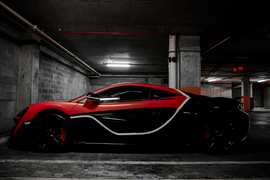
Fast forward to 2026, and the 2015 Dodge Charger SRT Hellcat has transcended its status as a mere car to become a modern classic. In an era dominated by electrification and autonomous driving technology, the Hellcat represents a glorious send-off to the internal combustion engine. Its raw, unfiltered power and mechanical symphony are qualities that