
Title: 2027 BMW i3 ‘Neue Klasse’: A Bold Redefinition of the Electric Sedan
The automotive world is experiencing a seismic shift, driven by the relentless advance of electric vehicle technology. For established luxury brands like BMW, this transition represents both an existential challenge and an unprecedented opportunity. Nowhere is this more evident than in the highly anticipated 2027 BMW i3. Departing from the path of incremental electrification, BMW has unveiled a vehicle that doesn’t just carry the torch of its storied past—it ignites a new one. This isn’t merely an electric 3-Series; it is the spearhead of the “Neue Klasse” (New Class), a revolutionary architecture poised to redefine the very essence of the ultimate driving machine for the digital age.

For over a decade, BMW’s i sub-brand has been a testament to the company’s commitment to electrification, producing iconic models like the innovative i3 city car and the luxurious iX flagship. Yet, as the EV market matures, the need for a scalable, dedicated platform has become critical. The 2027 BMW i3 answers this call, abandoning the shared architectures of its predecessors in favor of a ground-up, 800-volt system. This strategic pivot places the i3 in direct competition with Silicon Valley newcomers who have built their empires on similar principles of digital-first design. With its stunning aesthetic, groundbreaking technology, and performance benchmarks that challenge convention, the 2027 i3 is not just BMW’s latest electric car—it is the vanguard of the brand’s future.
Unveiling the Neue Klasse: A Legacy Reimagined
The choice of the name “Neue Klasse” is steeped in history, evoking the revolutionary compact sedans of the 1960s that single-handedly saved BMW from financial ruin and established its identity as a purveyor of premium, driver-focused automobiles. Today, the stakes are arguably even higher. As the automotive landscape fragments and consumer loyalties are tested by the allure of disruptive newcomers, BMW needs another defining moment. The 2027 i3 is engineered to be precisely that moment—a vehicle that simultaneously honors BMW’s heritage while embracing a radical vision of what a luxury sedan can be in 2026 and beyond.
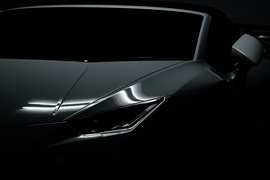
The aesthetic language of the i3 marks a decisive departure from the current design trajectory of BMW’s gasoline-powered counterparts. While familiar BMW motifs are present—the iconic kidney grille and quad-element headlights—they are reinterpreted through a distinctly futuristic lens. The grille, a symbol of BMW identity for nearly a century, is reimagined not as a functional air intake but as a luminous digital canvas, capable of displaying a range of lighting signatures and animations. This blurring of the line between static design and dynamic, interactive technology is a central theme of the Neue Klasse.
The silhouette of the 2027 i3 is a masterclass in aerodynamic efficiency, an absolute necessity for maximizing range in an era where every mile counts. The bodywork is characterized by taut, uninterrupted surfaces and flush detailing that minimizes drag. This is not merely about achieving impressive aerodynamic figures; it is about creating a visual statement of purpose. The vehicle appears sculpted by the wind itself, a seamless form that suggests forward momentum even at a standstill. This design philosophy extends to the flush door handles and the absence of conventional side mirrors, replaced by a sophisticated camera system, further refining the aerodynamic profile and underscoring the car’s commitment to cutting-edge technology.
Stepping inside the 2027 BMW i3 is akin to entering a concept car brought to life. The interior represents perhaps the most radical transformation, prioritizing digital interaction and passenger experience over traditional automotive layouts. The dashboard is dominated by the panoramic iDrive display, a sweeping, curved screen that spans the width of the cabin. This is not simply a larger version of existing infotainment systems; it is a fundamentally different approach to human-machine interaction. The display is intelligently segmented, with the section directly in front of the driver dedicated to essential driving information—speed, navigation prompts, and energy usage—while the remaining area is a customizable canvas for entertainment and connectivity.
This digital-first approach necessitates a new interface philosophy. The traditional array of physical buttons and rotary controls has been largely supplanted by touch-sensitive surfaces and advanced voice commands. The central touchscreen, with its distinctive parallelogram shape, is positioned to be within easy reach of both driver and front passenger, encouraging a shared digital experience. Yet, BMW has not abandoned the driver entirely. The M Sport steering wheel, a nod to the brand’s performance heritage, features a unique spoke design that provides a tactile anchor point amidst the digital fluidity of the cabin. This balance between intuitive control and digital innovation is the hallmark of the Neue Klasse interior design.
Under the Hood: The Power of the 800-Volt Architecture
The technological heart of the 2027 BMW i3 is its revolutionary 800-volt electrical architecture. This is a significant departure from the 400-volt systems that have been the industry standard, and it represents a strategic alignment with the most advanced EV platforms currently under development. The advantages of an 800-volt architecture are manifold, primarily revolving around charging speed and thermal management.
The most immediate benefit for consumers is the potential for ultra-fast DC charging. With the capability to accept charging rates of up to 400 kW, the i3 can replenish its battery at unprecedented speeds. In real-world terms, this translates to adding hundreds of miles of range in the time it takes to stop for a coffee break. This capability addresses one of the most significant remaining barriers to mainstream EV adoption: charging anxiety. By making the charging experience as convenient as a traditional fuel stop, the i3 challenges the notion that EVs require a fundamental lifestyle adjustment.

Beyond charging, the 800-volt system offers substantial performance and efficiency benefits. The higher voltage allows for thinner, lighter wiring throughout the vehicle, reducing overall weight and parasitic energy losses. Furthermore, it enables more precise thermal management of the battery and power electronics, allowing them to operate at peak efficiency for longer durations, whether during spirited driving or high-speed charging.
The battery pack itself is a marvel of engineering, utilizing next-generation cell chemistry that achieves 20 percent greater energy density than previous BMW EV generations. This increased density, combined with a substantial total capacity of 109 kWh, allows the 2027 i3 to achieve an estimated EPA range of approximately 440 miles. This figure places the i3 at the forefront of the electric sedan segment, capable of long-distance journeys that rival and, in many cases, exceed the capabilities of gasoline-powered competitors.
Performance Dynamics: Redefining the Ultimate Driving Machine
For decades, the BMW 3-Series has been the benchmark against which all sport sedans are measured. The 2027 i3 carries this legacy forward with an electrified powertrain that delivers performance metrics that are nothing short of breathtaking. The launch model, the i3 50 xDrive, features a dual-motor all-wheel-drive system that produces a combined output of 463 horsepower and 476 pound-feet of torque.
This power is delivered instantaneously, a characteristic of electric powertrains that BMW has long sought to emulate and perfect in its gasoline engines. The all-wheel-drive system, managed by a sophisticated central computer, ensures that this power is translated into grip and acceleration with surgical precision. The result is a 0-to-60 mph time that shatters the conventional definition of a family sedan, positioning the i3 in direct competition with dedicated sports cars.
Yet, raw acceleration is only one facet of the driving experience. BMW’s engineering philosophy has always emphasized balance, handling, and driver engagement. The Neue Klasse architecture provides a pristine foundation for this pursuit. The battery pack is integrated into the floor structure, creating a low center of gravity that significantly enhances cornering stability. The weight distribution is meticulously optimized to achieve a near-perfect 50/50 balance, a critical factor in creating a car that feels agile and responsive.
The steering system has been completely re-engineered for the digital age. While retaining the communicative feel that BMW drivers expect, it incorporates advanced variable-ratio technology that adjusts the steering effort and responsiveness based on vehicle speed and driving mode. This allows the i3 to feel nimble and direct at low speeds in urban environments, yet stable and planted during high-speed highway cruising. The integration of advanced driver-assistance systems, particularly those that manage torque vectoring and stability control, further refines the driving dynamics, allowing drivers to explore the car’s performance envelope with confidence and control.
Technological Integration: A New Computing Paradigm
The computational requirements of the 2027 i3 are staggering, far exceeding those of previous BMW models. To manage the complex operations of the vehicle—from the advanced driver-assistance systems to the panoramic infotainment display and the high-voltage powertrain management—BMW has adopted a distributed computing architecture based on four powerful onboard supercomputers.
This approach represents a significant shift away from the traditional domain-specific electronic control units (ECUs) that have characterized automotive design for decades. By consolidating functions into fewer, more powerful processors, BMW has reduced complexity, saved weight, and, most importantly, enabled a new level of software-defined functionality. Each of the four supercomputers is responsible for a specific cluster of operations, working in concert to provide a seamless and intelligent user experience.
The implications of this computing power extend far beyond infotainment and powertrain management. It is the foundation upon which BMW’s autonomous driving ambitions are built. The 2027 i3 is equipped with a comprehensive sensor suite, including high-resolution cameras, radar, and lidar, enabling it to perceive its environment with a level of detail that rivals human perception