
Title: The 2027 BMW i3 ‘Neue Klasse’ Electric Sedan: Redefining Luxury Mobility with Groundbreaking Technology and Sustainable Design
In the rapidly evolving landscape of electric vehicle innovation, BMW has once again asserted its leadership with the unveiling of the 2027 i3 ‘Neue Klasse’ sedan. This marks a pivotal moment for the storied German automaker, signaling a bold new direction that combines heritage design with cutting-edge technology. Far more than just an electric successor to the iconic 3-Series, the i3 represents a paradigm shift in automotive engineering, sustainability, and user experience. Having closely followed BMW’s trajectory for the past decade, I can attest that this latest iteration is poised to redefine segment expectations and solidify the brand’s position at the forefront of the EV revolution.
The i3 Returns in a Neue Way: A Nod to Heritage, A Leap into the Future
The ‘Neue Klasse’—German for “New Class”—is a term steeped in BMW history. In the 1960s, this designation heralded a line of compact executive cars that resurrected the company from financial peril and established its reputation for performance and engineering excellence. Today, BMW has resurrected this moniker for an all-new generation of electric vehicles, starting with the iX3 SUV and its sedan counterpart, the i3. While the stakes may not be quite as existential as those of its predecessors, the success of this new class is crucial for BMW’s global competitiveness in the fiercely contested premium EV market, particularly against rivals like Tesla, Mercedes-Benz, and Audi.
The 2027 BMW i3 is not merely a rebadged or re-skinned version of existing models. Instead, it debuts as the dedicated electric analog to the venerable 3-Series sedan, occupying a similar footprint yet built upon an entirely new, dedicated electric architecture. This separation from internal combustion platforms allows for a more holistic approach to EV design, optimizing space, weight distribution, and aerodynamic efficiency. Physically, the i3 measures approximately 1.6 inches longer, 1.5 inches wider, and 1.6 inches taller than its gasoline-powered sibling, with a wheelbase that has expanded by nearly two inches. This subtle yet significant dimensional shift translates directly into a more spacious and commanding cabin environment.
Underpinning this new generation of BMW EVs is an advanced 800-volt electrical architecture. This high-voltage system enables significantly faster charging speeds compared to traditional 400-volt architectures. While the i3 is equipped with a standard NACS port, compatible with Tesla’s charging infrastructure, CCS compatibility is maintained via an adapter. The system is capable of ingesting electricity at up to an astonishing 400 kW under optimal conditions, allowing for rapid DC fast charging sessions. For home or Level 2 charging, the vehicle supports a robust 15.4 kW AC charger. The battery pack itself is a critical structural element of the chassis, utilizing next-generation cells that boast 20% greater energy density than those found in BMW’s current EV lineup. With a total capacity of 109 kWh, BMW estimates a class-leading maximum range of approximately 440 miles on a single charge, a figure that directly challenges and potentially surpasses key competitors in the premium sedan segment.
Performance Metrics and Powertrain Innovation
The initial launch configuration of the 2027 BMW i3 50 xDrive features a dual-motor all-wheel-drive powertrain that delivers a combined output of 463 horsepower and 476 pound-feet of torque. This places the i3 firmly in the performance-sedan category, offering acceleration and responsiveness that will satisfy even ardent driving enthusiasts. BMW’s M Sport division will undoubtedly introduce higher-performance variants in the near future, but this initial offering demonstrates the brand’s commitment to providing exhilarating driving dynamics without compromising efficiency. Further details regarding the powertrain options and performance specifications for other i3 variants are expected to be announced closer to the production date.
The computational prowess behind the i3 represents another significant leap forward. The vehicle is orchestrated by a new central computing architecture comprising four independent supercomputers. Each unit is responsible for controlling specific functional domains, such as driving dynamics, infotainment, driver assistance systems, and body electronics. These advanced processors are claimed to possess 20 times the computing power of previous BMW models, enabling more sophisticated algorithms, faster processing speeds, and enhanced safety features. Crucially, this centralized architecture also contributes to a reduction in weight and complexity compared to traditional distributed electronic control unit (ECU) setups, further optimizing the vehicle’s overall performance and efficiency.
A Glimpse Inside the i3: A Radical Rethinking of the BMW Interior
Stepping inside the 2027 BMW i3 reveals an interior environment that marks a dramatic departure from BMW’s current design language, echoing the futuristic vision first previewed in the iX3 concept. The cabin eschews traditional dashboard layouts for a minimalist, driver-centric design that prioritizes digital interaction and sustainable materials. At the heart of the interior is the Panoramic iDrive display, a single, shallow screen that spans the entire width of the dashboard. This seamless display is logically divided into distinct zones: the area immediately in front of the driver serves as a comprehensive instrument cluster, providing essential driving information such as vehicle speed, power consumption, and navigation cues. The remaining sections of the display are fully customizable, allowing occupants to tailor the information presented to their specific preferences.
Dominating the center console is a nearly 18-inch touchscreen with a distinctive parallelogram shape. This unique form factor is ergonomically optimized to place frequently accessed controls within easy reach of the driver, minimizing the need to stretch or reposition. The interface itself features a new, highly intuitive operating system that combines touch sensitivity, voice commands, and gesture controls for a seamless user experience. While the i3’s design philosophy leans heavily into digital integration, BMW has not abandoned tactile feedback entirely. A selection of essential controls, such as climate settings and volume adjustment, retain physical materiality, providing a satisfying sensory connection for the driver. A high-resolution augmented reality head-up display is also available, projecting critical information directly onto the windshield in the driver’s line of sight, further enhancing safety and reducing cognitive load.

The steering wheel design is another area where BMW has embraced innovation. The standard wheel features a unique two-spoke design with spokes positioned at the top and bottom, while the sides are left open. This unconventional layout is intended to create a more open and airy feel within the cabin and provides an unobstructed view of the digital instrument cluster. For those who prefer a more traditional driving experience, an optional M Sport steering wheel is available, featuring a more conventional three-spoke design with spokes at the 4- and 8-o’clock positions.
Sustainable Materials and Design Philosophy
BMW’s commitment to sustainability extends deeply into the i3’s interior construction. Reflecting the growing consumer demand for environmentally responsible vehicles, the interior utilizes a range of recycled and plant-based materials. The seat upholstery, for instance, is available in a high-quality vegan leather alternative derived from renewable resources, while other interior trim elements incorporate recycled plastics and sustainably sourced woods. This holistic approach to material selection ensures that the i3’s luxury credentials are not compromised by its environmental focus, demonstrating that premium and sustainable can coexist harmoniously.
Reinterpreting Iconic BMW Design Cues
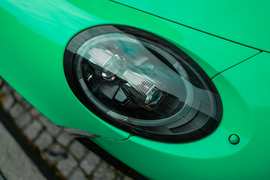
While the interior represents a bold departure, the exterior design of the 2027 BMW i3 masterfully balances innovation with brand heritage. The front fascia pays homage to classic BMW design elements while adapting them for the electric era. The iconic twin kidney grilles are present, now reimagined as a single, integrated unit that serves as a visual focal point. These grilles can be illuminated, adding a sophisticated and futuristic aesthetic. The headlights, while retaining the characteristic BMW four-element design, feature a modern interpretation with a distinct sideways checkmark shape, giving the car a sharp, intelligent gaze.
The overall stance of the i3 further evokes BMW’s rich history. The front fascia leans slightly forward at a 6-degree angle, a subtle nod to the classic “shark-nose” designs of BMW sedans from the 1970s and 1980s. This aerodynamic consideration not only improves efficiency but also imbues the vehicle with a sense of forward motion and purpose. Anders Warming, head of BMW’s Designworks, describes this design language as the “start of a new form language for the entire brand,” indicating that these aesthetic principles will influence future BMW models across the lineup.
Strategic Positioning in the BMW Portfolio
The introduction of the 2027 BMW i3 represents a strategic recalibration of the brand’s product hierarchy. While the 3-Series has long been considered the core model of the BMW portfolio, representing the quintessential blend of performance, luxury, and everyday usability, the i3 signals a potential shift in that identity. BMW’s executives refer to the Neue Klasse cars, including the i3 and iX3, as “the new heart of the BMW brand.” This positioning suggests that electric mobility, rather than gasoline power, will define the brand’s essence in the coming years.
This strategic pivot is critical for BMW’s long-term success. As the automotive industry accelerates its transition to electrification, brands that fail to adapt risk being marginalized. By investing heavily in dedicated EV platforms, advanced battery technology, and software-defined vehicle architectures, BMW is positioning itself not just to compete, but to lead in the new era of mobility. The i3, with its blend of performance, range, technology, and sustainability, serves as the vanguard of this transformation.
Market Landscape and Competitive Outlook

The premium electric sedan segment is becoming increasingly crowded, with established luxury automakers and new EV startups vying for market share. The 2027 BMW i3 enters